How to Choose an Automotive Carbon Fiber Fabrication Supplier: The 2026 Buyer’s Guide
Updated on:
·
1,350 words
·
6–9 minutes
Short answer. A supplier worth your money is a real factory — not a trader — with in-house mold making, IATF 16949 and ISO 9001 certification, documented QC tests a written fitment guarantee, and the willingness to answer hard questions with specific numbers.
Here is the short answer. A supplier worth your money is a real factory — not a trader — with in-house mold making, IATF 16949 and ISO 9001 certification, documented QC tests (UV, rain, temperature cycling, fitment validation), a written fitment guarantee, and the willingness to answer hard questions with specific numbers. If any of these are missing, the low quote you get today becomes the return shipment you pay for next quarter.
This guide gives you the full buyer’s checklist, a process comparison table, ten questions to ask any supplier, the red flags we see buyers fall for — and, because we are a manufacturer ourselves, our own answers to every one of those questions.
First Check: Factory or Trader?
Half the “manufacturers” on sourcing platforms are trading companies. Traders are not always bad — but they add margin, add delay, and cannot control quality at the machine. Five ways to tell the difference in one email exchange:
Ask for a live video call on the production floor. A factory walks you to the CNC and the autoclave. A trader shows you a showroom.
Ask who owns the mold. Factories build and keep molds in-house. Traders outsource tooling to a factory you never meet.
Ask for mold life data. A real manufacturer knows how many parts each mold type delivers — because they maintain the molds themselves.
Ask for test reports, not photos. UV, rain, temperature cycling reports exist only where testing actually happens.
Ask a detailed engineering question. “What resin system and cure cycle do you use for prepreg parts?” Factory engineers answer in minutes. Traders answer tomorrow, after asking the factory.
The Buyer’s Checklist
What to Check
What Good Looks Like
Red Flag
Business type
Factory with own production lines
“We partner with many factories”
Certifications
IATF 16949 (automotive QMS) + ISO 9001
No certificates, or expired ones
Tooling
In-house mold design, CNC machining, maintenance
Tooling outsourced to third parties
QC tests
UV, rain, temperature cycling, fitment validation — documented
“We check every part by eye”
Fitment guarantee
Written guarantee with trial-fit on first sample
“Our parts fit 99% of cars” with no process behind it
A one-process factory forces your part into their machine. A real fabrication supplier matches the process to your part. Here is what each process is for:
Send these verbatim. The quality of the answers matters more than the price list.
Are you the factory, or a trading company?
Which certifications do you hold — and can I see current certificates?
Do you design and machine your own molds?
How many parts does each mold type produce before maintenance?
What QC tests do you run — and will I get the reports?
Do you make a first sample before mass production? Who pays for revisions?
What is your fitment guarantee if the part does not fit my car?
What is your real capacity and on-time delivery rate?
What is your MOQ — and my unit price at 25, 100, and 500 pieces?
How fast do you respond — in hours, in writing?
A supplier who answers all ten with specifics — numbers, documents, processes — is a supplier you can audit. Vague answers are your cheapest warning system.
Red Flags: How Buyers Get Burned
Carbon-look sold as carbon fiber. Hydro-dipped or wrapped plastic with a carbon pattern. Ask for a raw edge photo or a cut sample — real carbon shows woven layers on every edge. → 7 ways to tell real vs fake carbon fiber
Too few layers. A hood with three layers where seven are needed looks identical in photos — and flexes at highway speed. Ask for the layer count and layup schedule.
Inaccurate molds. Molds made from photos instead of 3D scans produce parts that almost fit. Ask how the mold data was acquired.
No stress or weather testing. Untested parts yellow, delaminate, or crack within a season. UV and temperature cycling tests are not optional for exterior parts.
Unrealistic tooling promises. A quality CNC mold takes weeks, not days. “New mold in 7 days” means a resin shortcut mold that degrades mid-production.
No sample stage. Any supplier who discourages sampling is telling you what the bulk order will look like.
Our Answers to the Same 10 Questions
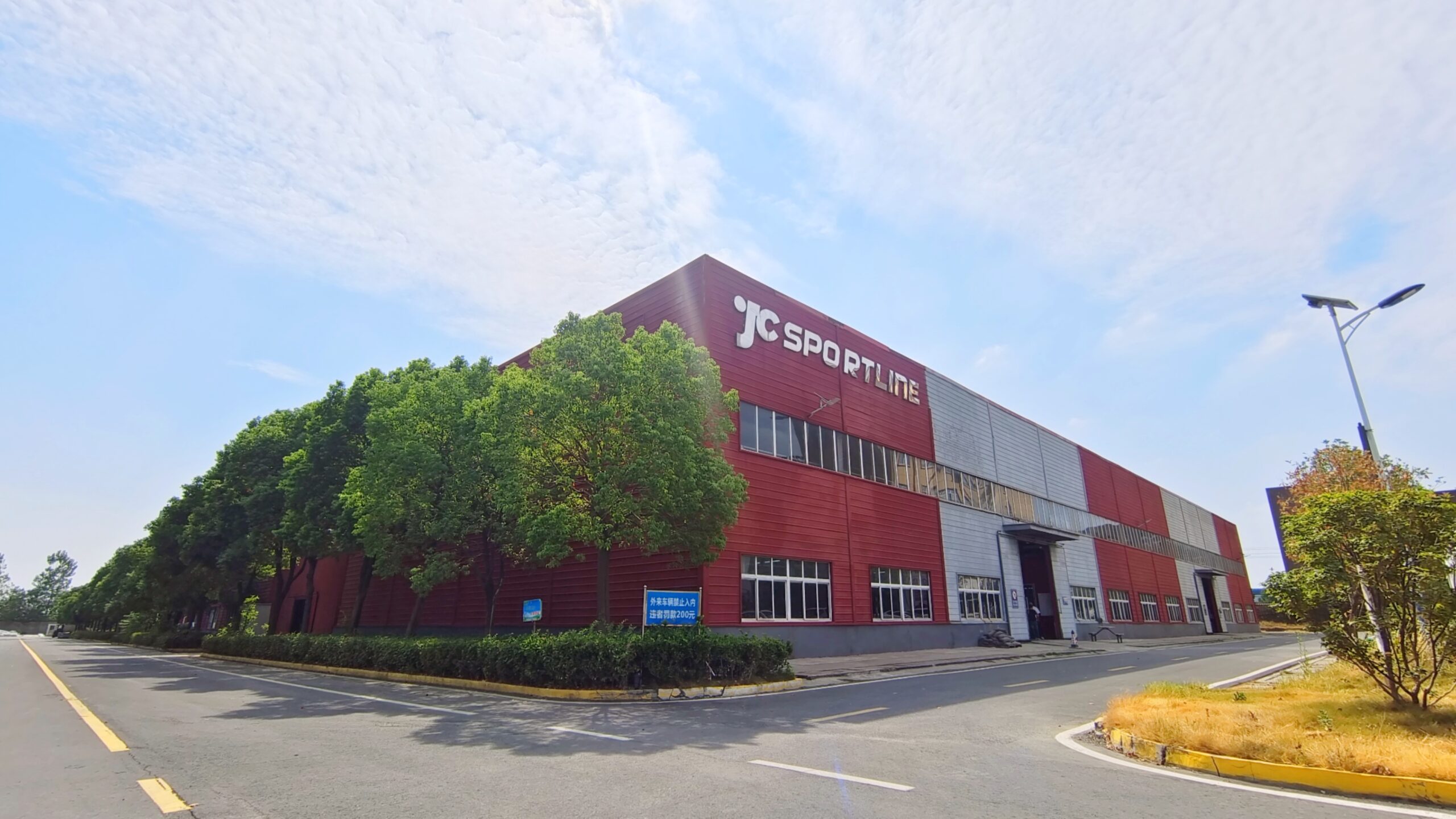
We are JC AUTOCARBON, the factory behind JCSPORTLINE. Here are our own answers — the same standard we recommend you hold every supplier to:
Factory. We manufacture in-house, from mold making to final QC. Nothing in the critical path is outsourced.
Certifications. IATF 16949, ISO 9001, and CE — certificate scans are published on our About page.
In-house tooling. 100+ CNC machines. We design, machine, replicate, and maintain every mold ourselves. Our tooling capability →
Mold life, in numbers. Wet carbon molds: 100–200 parts. Dry carbon molds: 300+ polish cycles. Steel molds for high-volume programs.
Documented tests. UV testing, rain testing, temperature cycling, and OEM fitment validation — with reports.
Sample first, always. First sample after tooling, fitment-verified, revised until you approve. Mass production starts only after your sign-off.
Fitment guarantee. Molds are built from 3D scan data of the actual vehicle; every first sample is trial-fitted before production.
Capacity, stated. Up to 1,000 parts and sets per day; 98% on-time delivery, tracked by our AI scheduling system.
For automotive parts, look for IATF 16949 (the automotive quality management standard) and ISO 9001 as a baseline. CE marking applies to products sold into European markets. Always ask to see current certificates, not logos on a website.
Ask for a live video call on the production floor, ask who owns and machines the molds, and ask for mold life data. Factories answer immediately with specifics; traders need to check with their partner factory.
Wet carbon uses hand lay-up with resin applied during molding — great value for styling parts. Dry carbon uses prepreg fabric cured in an autoclave — lighter, stronger, and typically 60–120% more expensive. A capable supplier offers both and recommends per part, not per catalog.
Yes — always. A first sample verifies fitment, surface quality, and structure before you commit to volume. Treat any supplier who pushes bulk orders without sampling as a red flag.
UV testing (yellowing resistance), rain testing, and temperature cycling (cracking and delamination) are the core three for exterior parts, plus OEM fitment validation for installation accuracy. Ask for reports, not promises.
Plan for a structured development cycle — our own runs about 58 days from confirmed drawings to approved sample, covering CNC mold machining, mold replication, and sample production. Promises of a few days signal shortcut molds that fail in production. See the full development timeline →
Request the first-sample fitment report, QC photos of the production batch, and pre-shipment inspection records. Reputable factories provide all three as standard practice.
Two carbon fiber parts can look identical in a photo and behave completely differently on the road. The difference is rarely the fabric you can see — it is how the material was prepared and which manufacturing process shaped it. At JC AUTOCARBON, we run five carbon fiber molding processes in-house, because no single method fits every part. This…
Carbon fiber is a fiber material that can greatly improve the performance of automobiles. It is generally used in various parts of the car body, such as bumpers, rearview mirrors, spoilers, and so on. It can not only increase the hardness of the car body, but also greatly reduce the weight of the car body,…
People who cut carbon fiber sheet by hand for first time, nine out of ten will make two kind of defects without noticing: frayed edges and delamination between layers. In this article, JC Autocarbon will share our cutting experience and suggestions as a manufacturer, include tool choosing, operation steps and anti-delamination skills, so you can…
Quick Answer: No. At least not the “welding” in traditional meaning. Metal welding works by let the metal melt, fuse together and then cool down to shape. But carbon fiber material mostly use thermoset resin matrix, after heating it will not melt, it directly decompose and carbonize, the arc or welding torch will only burn…
A carbon fiber part can look stunning in the box and terrible after one summer in the sun. Yellowing, bubbles, peeling clear coat, wavy weave — these are the defects that separate a real manufacturer from a workshop with a good camera. Quality is not a promise. It is a system. Here is the system…
Kevlar vs carbon fiber compared with real data — tensile strength, stiffness, weight, impact resistance and cost per pound. Plus why kevlar carbon fiber hybrid parts exist.
Factory-Direct Carbon Fiber, Built for You
Custom parts engineered and manufactured in-house — from one-off samples to bulk orders.
19+ Years Manufacturing1,000 Parts / Day CapacityReply within 12 Hours