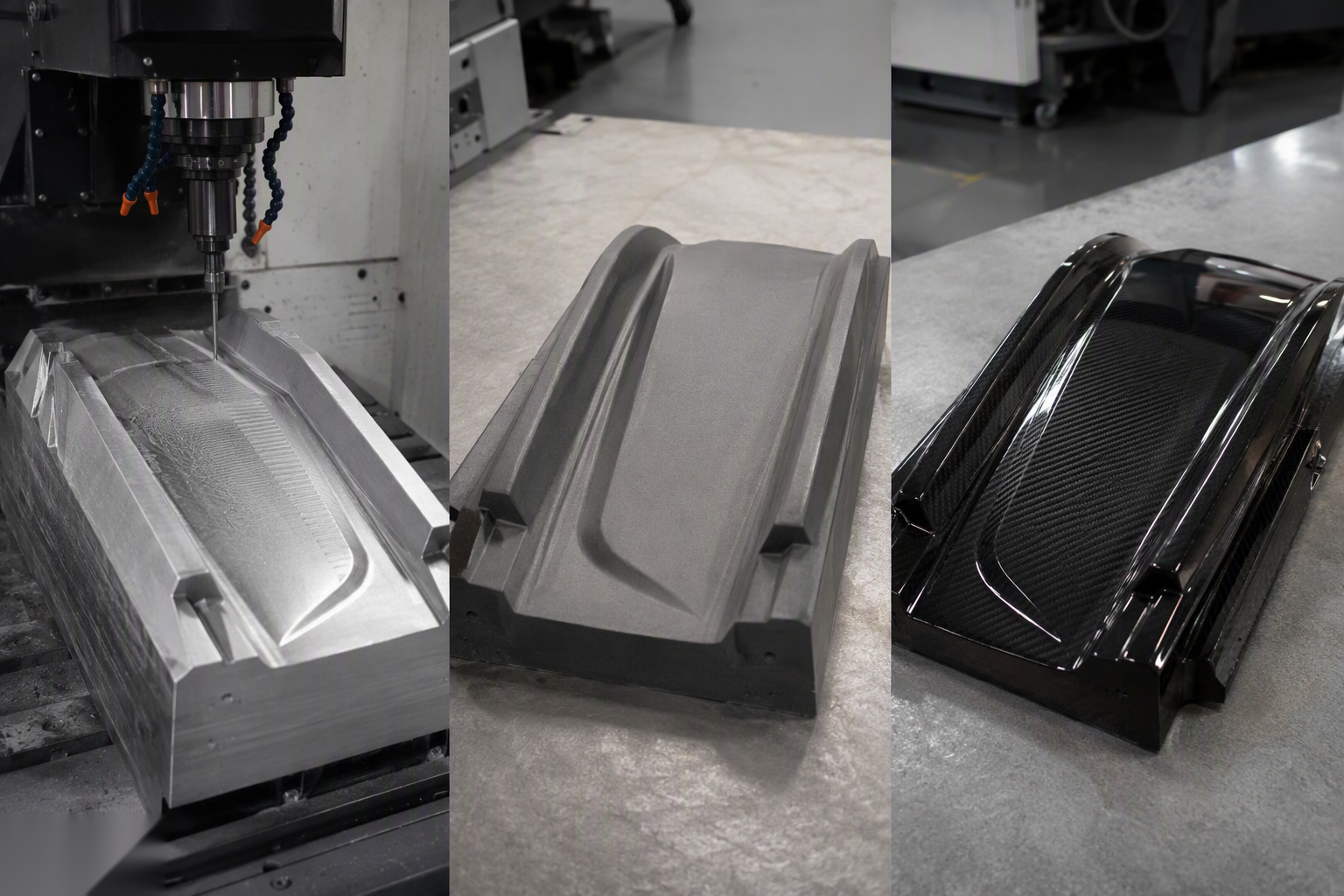
Quick Answer: At JC AUTOCARBON, we give you a number up front: for most standard custom projects, the first sample is ready in 45–58 days after your design data is confirmed.
This article explains exactly where those days go, what “rapid” realistically means for carbon fiber, what drives the cost, and how to shorten your timeline.
If your drawings or sample are ready, skip ahead and send your project to our carbon fiber prototyping service team for a free feasibility review — our engineers reply within 12 hours.
What “Rapid” Really Means in Carbon Fiber Prototyping
Search for carbon fiber rapid prototyping and you will see promises of one to three weeks. Here is the honest version: those numbers usually describe a soft-mold styling sample — a cosmetic part pulled from a quick mold, not a validated, production-intent prototype.
Carbon fiber is not 3D-printed plastic. A real prototype needs tooling, controlled layup, and curing cycles that cannot be compressed without compromising the part.
Mold machining takes days to weeks depending on size. Resin cures on its own schedule. Skipping these steps produces parts that look right in photos and fail on the car.
So when we say rapid prototyping, we mean the fastest honest route to a sample you can actually validate: real-vehicle fitment, correct surface quality, and a design that can move into production tooling without starting over.
For most projects that number is 45–58 days — and for simple soft-mold styling parts, it can be shorter.
Where the 58 Days Go
The 58-day clock starts after design drawings are confirmed — design and confirmation time before that is separate. The three stages:
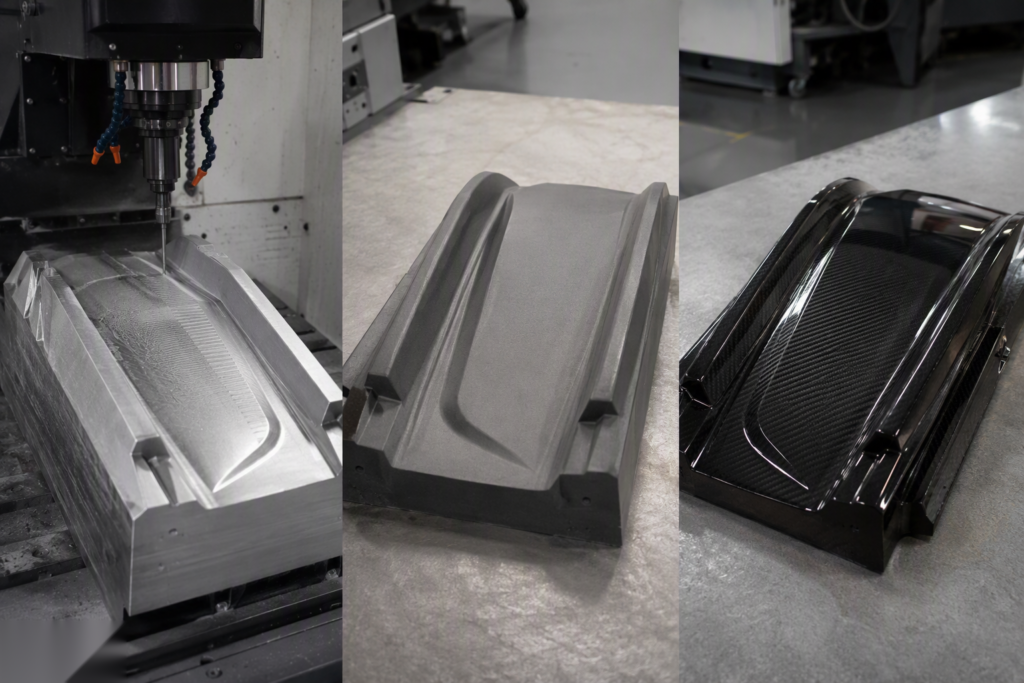
Stage 1: CNC Master Tooling — 15–20 Days
We CNC-machine the master tooling from your confirmed 3D data. Machining time depends on part size and complexity — a mirror cover takes days; a full bumper takes longer.
Stage 2: Production Mold Cloning — 20–25 Days
From the master, we build the production mold. This is the tool your parts will actually come out of, so we take the time to get surface and dimensions right.
Stage 3: Sample Production — 15–20 Days
Layup, curing, trimming, surface finishing, and inspection. The finished sample goes through dimensional checks and, where possible, trial fitting before we send it to you.
Can Every Project Finish in 58 Days?
Most prototypes and low-volume molds complete in 45–58 days. Some projects need more time:
We always confirm a realistic schedule before production begins — a promise we can keep beats a fast number we cannot.
Three Ways to Shorten Your Prototype Timeline
1. Choose the right tooling strategy. Soft molds are fast and low-cost — ideal while the design may still change. CNC composite or aluminum tools take longer but produce prototypes that reflect final geometry and surface quality.
Pre-production tooling suits pilot runs. Choosing the lightest tool that answers your current question is the single biggest timeline lever — our mold types and tooling cost guide breaks down the options.
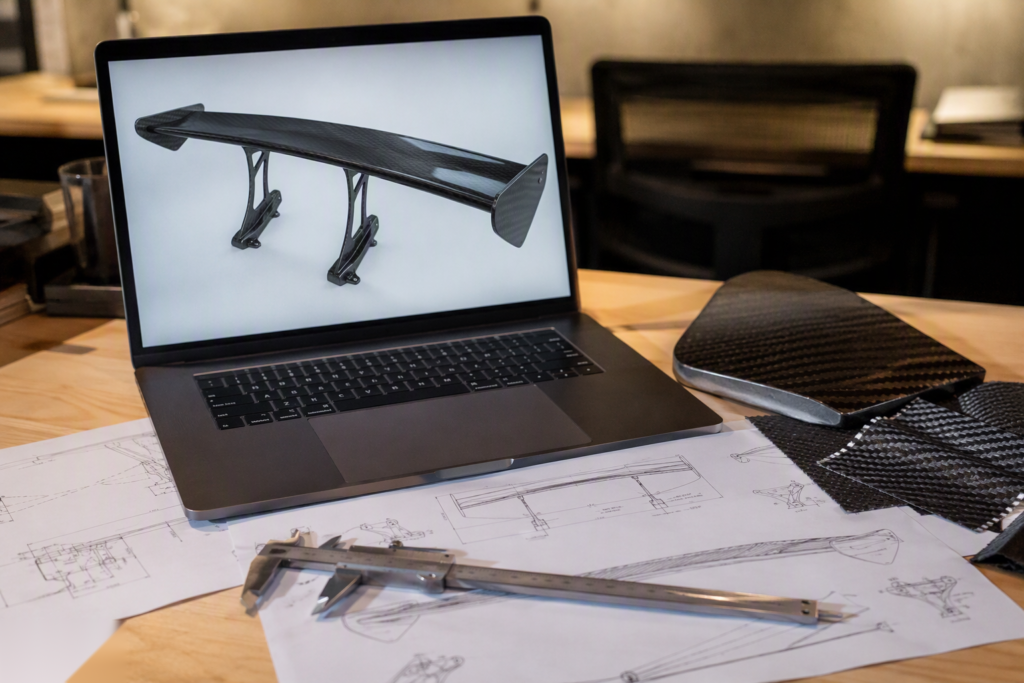
2. Send complete design data. Complete 3D files (STP / IGES) with clear material and finish requirements let our engineers start the DFM review immediately. Incomplete data adds days of back-and-forth before the clock even starts.
3. Approve quickly at each gate. Slow approvals are the most common cause of delays. Every project has clear approval points — design confirmation, mold approval, sample sign-off. Fast feedback keeps the schedule honest.

What Do You Need to Provide to Start?
Any one of these is enough to begin:
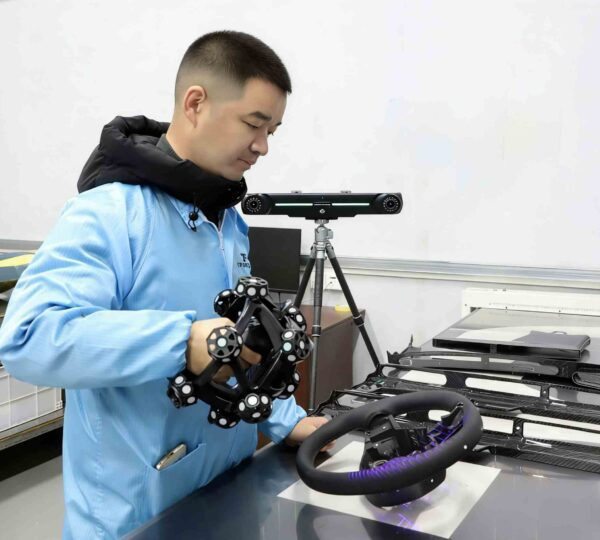
It also helps to tell us your functional requirements, material preference, tolerance expectations, and how the part will be used. Overseas projects can use our on-site 3D scanning support in Europe and the United States.
Our engineers then run an internal review, choose the best process route, and estimate your development time, sample date, and delivery schedule.
How We Keep Quality During Rapid Development
A fast timeline means nothing if the sample is wrong. That is why every stage includes quality gates:
This is how we make sure the part matches your design intent — not just the schedule. The full validation checklist is on our rapid prototyping service page.

Tolerance and Fitment: How We Validate Before Production
A prototype only matters if it fits. Every first sample goes through a three-step validation loop before we ask for your approval:
- CAD overlay comparison — first-article data is checked against the 3D scan of the actual vehicle, never against photos or drawings alone.
- Mounting-point verification — bolt holes, clips and brackets are measured against OEM positions on the sample.
- On-car trial fitting — panel gaps, alignment and installation are confirmed on the real vehicle before production approval.
This loop is why mold corrections happen before production, not after. It is the same OEM fitment validation standard we run on every program.
What Does a Carbon Fiber Prototype Cost?
Prototype cost depends on part size, geometry, tooling type, material system, and surface finish. A small trim piece on a rapid prototype mold costs far less than a full hood on CNC aluminum tooling. As a rough guide:

Because mold making is the main investment, choosing the right tooling strategy early matters more than the part itself. We quote each project individually after reviewing your data — and for many projects, development fees can be credited against future bulk orders.
From Prototype to Production

A prototype proves the design; it does not automatically prove the production process.
That is why every prototype at JC AUTOCARBON is built with production intent — layup logic, mold structure, and demolding direction are planned so the approved design can scale into mass production without redesign.
After sample approval, standard bulk lead time is 15–45 days depending on quantity, process, and finishing requirements.
Recent Prototype Programs: Three Real Examples
Prototype validation is not a slide in a sales deck — it is how these programs reached production:
Program | Client and scope | Validation path | Outcome |
|---|---|---|---|
US aftermarket distributor; full kit starting from a single hand sketch, no CAD data | 3D scanning and reverse engineering; 3D-printed prototypes validated fitment part by part | Concept to on-car delivery in 58 days; 100 sets | |
German commercial vehicle aftermarket brand; OEM-level fitment required before any production mold | 3D design, 3D-printed rapid prototypes and on-car fitment checks, iterated until production data was locked | 300 sets; about 30 sets per month after sample approval | |
Chinese EV manufacturer (OEM program); batch-to-batch consistency as a hard requirement | Prepreg autoclave molding with CNC steel molds; OEM-level inspection of dimensions, assembly, strength and appearance | 2,000 sets per year in batch production |
Your program can start the same way — a sketch, a sample or a 3D file is enough. Start a prototype project →
FAQ
Ready to start the clock?
Send us your sample or 3D files today — our engineers will reply with a free feasibility review, a process plan, and a confirmed timeline within 12 hours.
Want to keep reading? Browse the full Resource Center for more articles, installation guides, and pricing insights from the factory.
Author: He Dong
He Dong – Automotive & Motorcycle Engineering Specialist, has spent 20+ years doing what he loves most — making cars and bikes faster, sharper, and better looking.