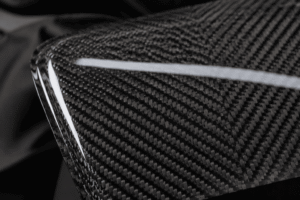
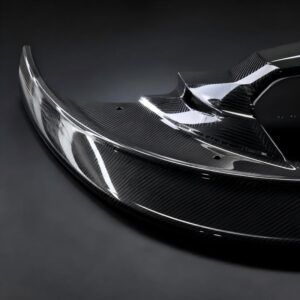
Spend five minutes shopping for carbon fiber car parts and two words keep coming up: dry carbon and wet carbon. Most sellers use them like quality grades — “dry” means good, “wet” means cheap. We build both in our factory every day, and the truth is less dramatic: they are two different ways of making a part, and each one is right for a different job.
Here is how each process actually works, what the real differences are, and how to pick the right one for your project.

What Is Dry Carbon Fiber?
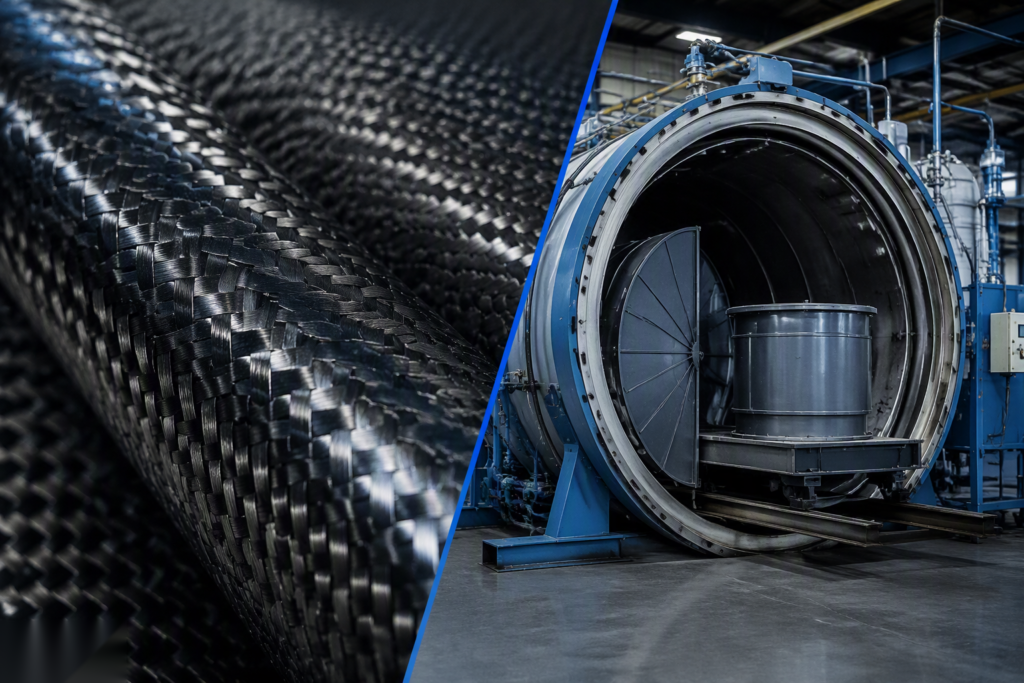
Dry carbon starts with a material called prepreg — carbon fabric that already carries a precise dose of resin, applied by machine at the material plant. The fabric stays frozen at −18 °C until we cut it, then goes into a mold and cures under heat and pressure, usually in an autoclave at 120–180 °C.
The resin amount is fixed by machine before anyone touches the fabric, so every part comes out nearly identical. Dry carbon parts typically hit a fiber content of 60–70%, with void (air bubble) content below 1%.
Key facts about dry carbon
What Is Wet Carbon Fiber?
Wet carbon (also called wet layup) starts with dry fabric. A layup worker brushes or infuses liquid resin into the fabric by hand, and the part cures at room temperature or with mild heat.
It is flexible, quick to set up, and much cheaper to tool. The trade-off is control: the resin amount depends on handwork, so weight and strength can drift from part to part. Fiber content is usually 45–55%, and tiny voids are more common.
Key facts about wet carbon
One thing worth knowing:
Forged carbon — the marbled, chopped-fiber look — is an appearance style, not a quality grade. It can be made with controlled processes too. You cannot tell how a part was made just by looking at it.
Dry Carbon vs. Wet Carbon: Side by Side
Factor | Dry Carbon (Prepreg + Autoclave) | Wet Carbon (Hand Layup / Infusion) |
|---|---|---|
Resin control | Fixed by machine | Depends on handwork |
Fiber content | 60–70% | 45–55% |
Void content | Below 1% | Up to ~5% |
Weight | Lighter | Heavier |
Batch consistency | Very high | Medium |
Tooling cost | Higher | Lower |
Best for | Structural, weight-critical, premium visible parts | Cosmetic parts, low volumes, budget projects |
Which One Should You Choose?
The right question is not “which is better” — it is “what does this part need to do?“
Choose dry carbon when
Choose wet carbon when
One more thing from the shop floor: a badly cured dry carbon part is worse than a well-made wet one. Process discipline beats the label every time — so ask your supplier how the part is actually made, not just what they call it.
How We Do It at JC AUTOCARBON
We run both processes in-house — prepreg autoclave lines for dry carbon, and controlled vacuum infusion and wet layup for cost-sensitive parts. Send us a project and our engineers will recommend the process based on your part’s load, look, volume, and budget. We never push the expensive option when the simple one does the job.
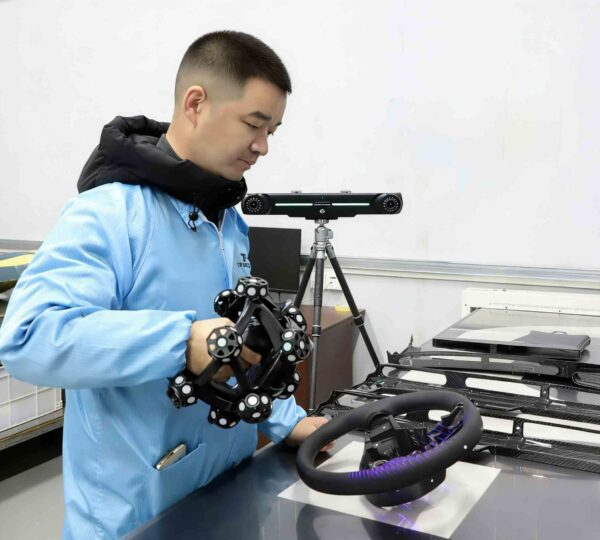
Whichever process you pick, every batch goes through surface, dimension, and fitment checks before it leaves our packing area.
FAQ
Not sure which process fits your project?
Send us your part drawings or a sample
Our engineering team will review it and recommend the most cost-effective route.
Want to keep reading? Browse the full Resource Center for more articles, installation guides, and pricing insights from the factory.
Author: He Dong
He Dong – Automotive & Motorcycle Engineering Specialist, has spent 20+ years doing what he loves most — making cars and bikes faster, sharper, and better looking.