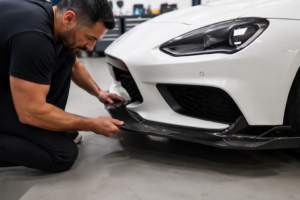
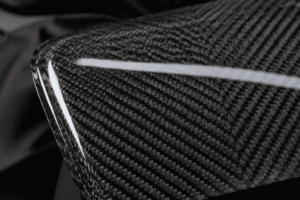
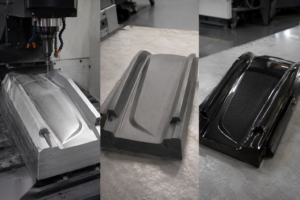
Spend five minutes shopping for carbon fiber car parts and two words keep coming up: dry carbon and wet carbon. Most sellers use them like quality grades — “dry” means good, “wet” means cheap. We build both in our factory every day, and the truth is less dramatic: they are two different ways of making a part, and each one is right for a different job.
Here is how each process actually works, what the real differences are, and how to pick the right one for your project.

Dry Carbon vs. Wet Carbon: Side by Side
Factor | Dry Carbon (Prepreg + Autoclave) | Wet Carbon (Hand Layup / Infusion) |
|---|---|---|
Process | Prepreg fabric cured under heat and pressure in an autoclave (120–180 °C) | Liquid resin applied by hand or infused into dry fabric; cured at room temperature or with mild heat |
Resin control | Fixed by machine at the material plant | Depends on handwork |
Fiber content | 60–70% | 45–55% |
Void content | Below 1% | Up to ~5% (3–8% even with vacuum bagging) |
Strength & stiffness | Baseline; typically 40–60% higher than an equivalent wet part | Lower, and varies part to part |
Weight | Lighter — roughly 30–50% less than the same part in wet carbon | Heavier due to excess resin |
Batch consistency | Very high | Medium |
Surface quality | Clean, pinhole-free weave straight out of the mold; often matte or satin | Often needs extra sanding; very glossy from thicker resin and clear coat |
UV / aging resistance | Better — controlled resin content and low voids slow yellowing and fading | Weaker — excess resin yellows and can crack under long sun exposure; quality UV clear coat is essential |
Heat resistance | Higher — high-temperature cure resins raise the Tg; safer near engines and brakes | Lower — room-cure resins soften and deform sooner under sustained heat |
Repairability | Repairable for scratches and clear coat damage; structural damage usually means replacement | Same, but high void content makes delamination more likely after impact |
Tooling cost | Higher | Lower |
Unit cost | Roughly 3–5x a wet carbon part | Roughly 1/3–1/5 of a dry carbon part |
Material shelf life | Prepreg must stay frozen (−18 °C) and has a limited out-life; scheduling is constrained | Dry fabric and liquid resin store at room temperature; start almost anytime |
Production speed | Autoclave cycles of 2–6 hours; machine time is a shared bottleneck | Simple molds start almost immediately; good for quick, small runs |
Worker safety / environment | Cleaner handling, but cold storage and autoclaves consume significant energy | Higher exposure to liquid resin and solvents (VOCs); ventilation and PPE required |
Documentation | Batch certificates, lay-up schedule, and cure profile available on request | Often limited — ask before you order |
Best for | Structural, weight-critical, premium visible parts | Cosmetic parts, low volumes, budget projects |
What Is Dry Carbon Fiber?
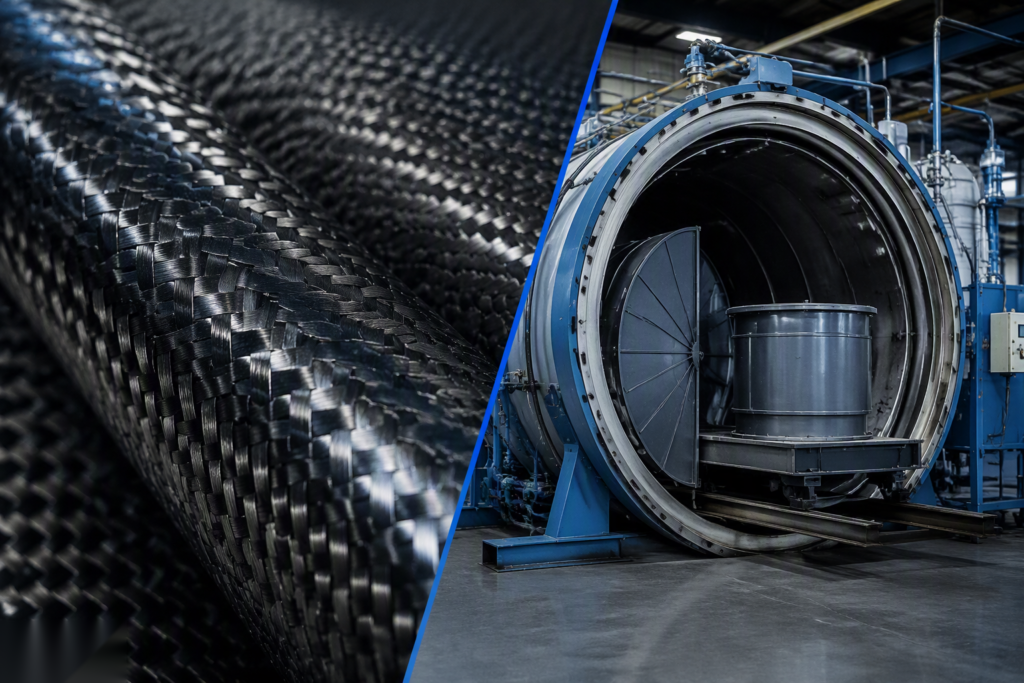
Dry carbon starts with a material called prepreg — carbon fabric that already carries a precise dose of resin, applied by machine at the material plant. The fabric stays frozen at −18 °C until we cut it, then goes into a mold and cures under heat and pressure, usually in an autoclave at 120–180 °C.
The resin amount is fixed by machine before anyone touches the fabric, so every part comes out nearly identical. Dry carbon parts typically hit a fiber content of 60–70%, with void (air bubble) content below 1%.

Key facts about dry carbon
What Is Wet Carbon Fiber?
Wet carbon (also called wet layup) starts with dry fabric. A layup worker brushes or infuses liquid resin into the fabric by hand, and the part cures at room temperature or with mild heat.
It is flexible, quick to set up, and much cheaper to tool. The trade-off is control: the resin amount depends on handwork, so weight and strength can drift from part to part. Fiber content is usually 45–55%, and tiny voids are more common.
Key facts about wet carbon
One thing worth knowing:
Forged carbon — the marbled, chopped-fiber look — is an appearance style, not a quality grade. It can be made with controlled processes too. You cannot tell how a part was made just by looking at it.
Which One Should You Choose?
The right question is not “which is better” — it is “what does this part need to do?“
Choose dry carbon when
Choose wet carbon when
One more thing from the shop floor: a badly cured dry carbon part is worse than a well-made wet one. Process discipline beats the label every time — so ask your supplier how the part is actually made, not just what they call it.
How to Tell Dry Carbon and Wet Carbon?
Because of the price difference between dry carbon and wet carbon, some sellers will sell wet carbon pretend as dry carbon. Sanding, painting and clear coat can cover many process marks on the wet carbon, make people very hard to distinguish dry carbon from wet carbon.
So, learning how to tell them apart is very important. Below we share some methods that we use in our quality inspection.
1. Look at the Back Side, The Most Practical Method
The front of a carbon fiber part can be made shiny and beautiful by clear coat, but for the back side, few people will spend extra cost to disguise it.
On the back of a dry carbon part, usually you can see the original carbon fiber weave, or the evenly treated carbon fiber layer, clean and neat. But the back of a wet carbon part is generally a whole piece of black coating, locally exposed fiberglass layer, or obvious uneven resin accumulation.
The reason of this difference is also simple: in the wet carbon handmade process, workers lay fabric in the mold and brush resin at the same time, the extra resin brushed on the front side will all accumulate to the back side; but the resin content of prepreg is fixed by machine when it leaves the material plant, after autoclave pressure curing, the back side will be as regular as the front side.

2. Feel the Weight, Most Obvious on Large Size Parts
Same size, same shape parts, wet carbon is obviously heavier, and the bigger the panel, the more obvious the difference. If you have two parts in hand that look almost same, the abnormal heavy one basically can be judged as wet carbon.
The fiber content of wet carbon is usually only 45–55%, the rest is all resin. The strength of resin is far worse than carbon fiber, but the weight is far heavier. The resin used on wet carbon does not provide strength guarantee, and also greatly increase the burden of the car body.
The industry magnitude reference is: same specification parts, dry carbon is about 30%–50% lighter than wet carbon.
3. Look at the Weave and the Edges
We can also look close at the fabric texture. The weave of dry carbon is clear and straight, the fiber spacing is even, edges and curved surfaces are still regular, looks beautiful and comfortable; but wet carbon often has slight weave distortion and stretch deformation near the edges, corners and holes, also the “bright spots” formed by resin accumulation.
Dry carbon prepreg is frozen and shaped, so after cutting the fabric form is still stable; but in wet carbon layup, the fabric soaked with liquid resin is relatively soft, workers pull and adjust it on complex curved surfaces, the texture will inevitably deform.
4. Look at the Gloss, Too Shiny Will Have Problem
Sometimes, the surface of dry carbon shows matte or satin texture, the weave is clearly visible, while the surface of wet carbon will be more shiny, because during manufacturing the surface resin and clear coat are applied thicker. The shinier gloss can cover the messy fabric texture, resin accumulation and small bubbles, so looking more beautiful does not mean the real quality is good.
5. Price as Auxiliary Judgment
The process of dry carbon doomed its price will always be higher than wet carbon. Prepreg, cold chain, autoclave working hours are all real costs. On the industry magnitude, the price of dry carbon part is about 3–5 times of wet carbon part.
If the price of a “dry carbon” is similar to wet carbon, then high probability it is fake. But sometimes even the price is expensive, it does not mean the dry carbon must be real. To be safe, still need to look at the real part to judge.
6. The Most Reliable Method: Look at the Documents
If you feel looking at pictures and price are both hard to judge, you can also ask the manufacturer to provide process documents:
- Lay-up schedule: the specification, gram weight, direction and stacking order of each fabric layer;
- Resin/fiber ratio: the factory resin content of the dry carbon prepreg;
- Cure profile: the temperature, pressure and time records of autoclave curing. The factory that can make dry carbon must have in-autoclave curing records to check; the one who can only show you surface gloss photos, basically can be judged as not.
You can ask us for these documents when you send inquiry, we will be very pleasure to provide them.
Beware of “Fake Carbon Fiber”: Stickers, Hydro Dipping and Plastic Wrapping
Wet carbon pretending to be dry carbon, at least it still uses real carbon fiber and real resin. Worse than this pretending behavior is direct fraud. The fake dry carbon products have no any relationship with carbon fiber, and the cost is even much lower than wet carbon.
Now this kind of fake products has already flooded the market, so we want to share the three common fraud methods with everyone.
The Three Common Types of “Fake Carbon”
1. Carbon fiber sticker (film-covered part)
Stick a layer of PVC sticker with imitation carbon fiber texture on the plastic part surface. The cost is the lowest, also the most common. In photos it maybe can muddle through, but the real object is extremely obviously fake.


2. Hydro dipping
Print the carbon fiber pattern on the plastic part surface through hydro dipping film. It fits better than sticker, can cover complex curved surfaces, but the essence is still a layer of printed pattern, no any fiber structure.


3. Plastic wrapped with carbon cloth
Wrap a layer of carbon cloth outside the injection molded plastic part (sometimes even only single side wrapping), then brush resin to cure. This kind cannot be distinguished by naked eyes — its surface is indeed real carbon cloth, but the internal load-bearing structure is still plastic, so it can be distinguished by strength and weight.
Four-Step Inspection Method
Step 1: Look at the three-dimensional feeling of the texture.
Real carbon fiber weave has weaving undulations. When you rotate the angle to look, the reflection of warp and weft fiber bundles will change in depth, have “wave light” like layering. The texture of sticker and hydro dipping is flat printed pattern, from any angle the reflection is same and dull.
Step 2: Look at the edges, folded edges and hole positions.
The texture of fake parts will break, misalign, stretch and deform at folded edges and holes, or simply does not extend over — because the pattern cannot change continuously with the three-dimensional shape. The texture direction of real woven fabric is continuously extended, at the wrapped edges you can see the natural bending of the fabric.
Step 3: Turn it over and touch the back side.
The back of sticker parts and hydro dipping parts is just plastic base color, smooth and even; on the back of plastic wrapped parts, often you can see the features of injection molded parts (ribs, screw posts, mold release marks). Real carbon fiber parts, even wet carbon, the back side at least have the fabric texture soaked by resin.
Step 4: Scratch test at hidden place.
Use fingernail or coin to lightly scratch at the inconspicuous edge: sticker can be scratched up at corners, hydro dipping will scratch off the color layer and expose the plastic base color; real carbon fiber scratches down only a small amount of resin powder, the weave itself will not peel off in pieces.
Fake Parts May Cause Serious Safety Hazards
When fake carbon fiber appears on load-bearing and aerodynamic parts, it will cause serious safety problems: front lip, rear wing and mirror caps bear real aerodynamic loads at high speed. Plastic core fake parts and inferior wet carbon parts with excessive resin are the same, all may deform, crack or even fall off, bring great safety risk to the car and the driver.
Our suggestion is simple: for the “carbon fiber parts” with unbelievably low price, first use the above four steps to check, after confirming real or fake, then install on the car.
How We Do It at JC AUTOCARBON
We run both processes in-house — prepreg autoclave lines for dry carbon, and controlled vacuum infusion and wet layup for cost-sensitive parts. Send us a project and our engineers will recommend the process based on your part’s load, look, volume, and budget. We never push the expensive option when the simple one does the job.
Whichever process you pick, every batch goes through surface, dimension, and fitment checks before it leaves our packing area.
FAQ
Not sure which process fits your project?
Send us your part drawings or a sample
Our engineering team will review it and recommend the most cost-effective route.
Want to keep reading? Browse the full Resource Center for more articles, installation guides, and pricing insights from the factory.
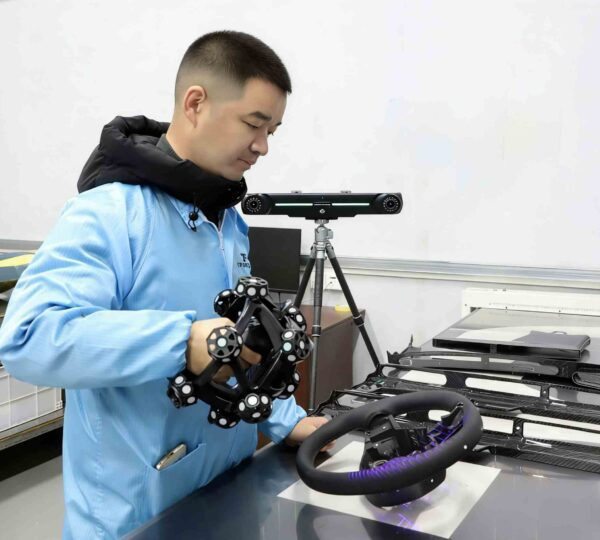
Author: He Dong
He Dong – Automotive & Motorcycle Engineering Specialist, has spent 20+ years doing what he loves most — making cars and bikes faster, sharper, and better looking.