In the last article we introduced to everyone what kind of material carbon fiber is, and explained its properties in detail: A Complete Guide: What Is Carbon Fiber Material and What Is It Used For?
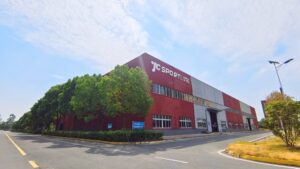
Because of its excellent performance, carbon fiber is favored by all walks of life. Light weight, high strength, high temperature resistance, corrosion resistance, from the fishing rods and rackets that everyone familiar with, to cars, racing cars, even Boeing 787 and aerospace vehicles all use this material. So how this magical material called “black gold” is actually made? In this article, we will use JC’s factory practical experience to explain the manufacturing process of carbon fiber in detail for everyone.

The History and Development of Carbon Fiber
Just like the slow growth of a giant technology tree, carbon fiber was not suddenly discovered by some scientist. It is the result of many excellent researchers in history pushing forward one after another. From its appearance to maturity, carbon fiber has crossed one and a half centuries.
The appearance of carbon filament can be traced back to more than 160 years ago. Around 1860, the British inventor Joseph Swan used carbonized paper strip as the filament of incandescent lamp, and made the earliest carbon filament in human history. More than ten years later, Edison commercialized the carbonized cotton thread and bamboo filament, but in this period carbon filament was not further researched and promoted because its performance in lighting direction was not as good as tungsten filament.


When time came to around 1960, in order to develop aerospace industry, some lighter and higher strength materials were needed, and carbon fiber material came back into people’s sight again. A company in United States called Union Carbide greatly promoted the development of carbon fiber. They prepared high performance graphite whiskers in carbon arc experiment, which proved carbon material can achieve amazing mechanical properties, and they also obtained the patent of high temperature carbonization of rayon fiber.
Then Osaka Industrial Research Institute in Japan took the baton. They successfully made high strength carbon fiber using polyacrylonitrile (PAN) as raw material, which laid the foundation of the modern mainstream carbon fiber process. After that, the British William Watt and Royal Aircraft Establishment (RAE) further improved the performance of PAN-based fiber and promoted its industrialization. Roger Bacon and Wesley Schalamon of Union Carbide, by hot stretching carbon filament above 2800°C, increased the modulus of rayon-based fiber by about one order of magnitude, and realized the market promotion of carbon fiber.

Ten years passed, carbon fiber achieved excellent development. In 1970, Toray of Japan cooperated with Union Carbide and launched T300 carbon fiber, which represented that PAN-based carbon fiber started industrial mass production, and the cost began to drop hugely from this time. Carbon fiber can therefore expand its application direction, from the unreachable aerospace industry, walked into the sports goods industry that within reach. Fishing rods, tennis rackets and golf clubs used this new lightweight material for the first time.

After 21st century, carbon fiber became further popularized. The carbon fiber usage of Boeing 787 and Airbus A350 accounts for more than half of the whole fuselage, BMW i3 realized the mass production of carbon fiber car body, the length of wind turbine blades broke through 100 meters, and carbon fiber spar cap is now the standard configuration. After carbon fiber technology became mature, the industry development direction turned from improving performance to reducing cost, and recycling technology.

Carbon Fiber Manufacturing Methods
Although carbon fiber is called “fiber”, carbon fiber is not directly “spun” out like spinning yarn. Actually, the manufacturing of carbon fiber is a two-stage route: first prepare the organic precursor fiber, then through high temperature treatments such as stabilization, carbonization and graphitization, “convert” it into carbon fiber. The type of precursor directly decides the process route and final performance. In industry there are mainly three kinds: polyacrylonitrile (PAN), pitch and rayon fiber.
Core process chain: precursor preparation → spinning → stabilization → carbonization → graphitization → surface treatment → sizing and winding. The details of the three routes on this chain are all different.
1. PAN-Based Carbon Fiber
PAN-based is the absolutely mainstream route at present, accounting for about 90% of global carbon fiber production, and it is also the main process of JC Autocarbon. Its advantages are high carbon yield, excellent comprehensive mechanical properties, and wide process window.
Polymerization & Spinning
Take acrylonitrile as the main monomer, add 2%–10% comonomer (such as itaconic acid, methyl methacrylate), used to adjust the heat release rate of the subsequent oxidation reaction and promote molecular orientation. The spinning solution obtained by polymerization is formed into continuous precursor fiber through wet spinning or dry-jet wet spinning (air gap spinning). Dry-jet wet spinning, because the fiber is dense and has few defects, is becoming the first choice of high performance precursor fiber. The temperature, pressure and draw ratio in the spinning process must be precisely controlled, any fluctuation will be inherited into the defects of the final carbon fiber.
Stabilization / Oxidation
The precursor fiber is kept in air at 200–300°C for tens of minutes to several hours, and runs under tension. In this stage, the linear molecules of PAN undergo cyclization, dehydrogenation and oxidation, and transform into a heat-resistant ladder structure. To speak simply, it makes the fiber “will not melt anymore”, so it can bear the high temperature of thousands of degrees later. Stabilization is the most time-consuming step in the whole production line, and also the step that most affects the strength.
Carbonization
The stabilized fiber enters the carbonization furnace filled with inert atmosphere such as nitrogen. At 1000–1600°C, non-carbon elements like hydrogen, oxygen and nitrogen escape in the form of CH₄, H₂, CO₂, NH₃ and other gases. The fiber loses weight about 40%–45%, the diameter shrinks, the carbon content rises to above 90%, and forms a carbon crystallite structure oriented along the axial direction.
Graphitization & Surface Treatment
If you want to get high modulus products, graphitization treatment at 1600–3000°C is also needed, to improve the regularity and orientation degree of carbon layers. Then through surface treatment such as anodic oxidation, active groups like carboxyl are introduced on the fiber surface, to improve the bonding force with resin matrix. Finally, after washing, drying, coating epoxy sizing agent and winding, it becomes the carbon fiber tow that downstream can use.

2. Pitch-Based Carbon Fiber
Pitch Preparation (Isotropic vs. Mesophase)
The raw material comes from petroleum pitch or coal tar pitch, and needs to be prepared through deashing, refining and heat treatment. The preparation direction is divided into two types: isotropic pitch is used to produce general grade (low performance, low cost) fiber; mesophase pitch, an aromatic macromolecule system with liquid crystal orientation, is the key of high performance pitch-based fiber, and its preparation itself is the core technology barrier.
Melt Spinning & Carbonization
Mesophase pitch is melt extruded, cooled and drawn into fiber. The melt temperature window is extremely narrow — if temperature drops a little more than ten degrees, the viscosity may increase several times, directly ruining the strength and modulus of the fiber, so the temperature control accuracy requirement is very strict. Then the fiber is oxidized and infusibilized in air at 250–350°C, goes through short pre-carbonization at 700–900°C, carbonization at 1500–1800°C, and finally graphitization close to 3000°C, the graphite layers are highly oriented along the fiber axial direction.
The characteristics of pitch-based fiber are extremely high elastic modulus and excellent thermal conductivity, but the tensile strength is relatively low and the cost is high. It is mainly used in satellite structural parts, spacecraft thermal management panels and other scenarios with extreme requirements on stiffness and heat conduction.

3. Rayon-Based Carbon Fiber
Cellulose Pyrolysis Process
This is the most traditional and longest history route: use cellulose such as cotton pulp and wood pulp as raw material, through alkalization and xanthation to make viscose spinning solution, wet spun into rayon filament, then through washing, dipping, stabilization and carbonization to convert into carbon fiber. The carbon yield of cellulose is relatively low (only about 20%–30%), the production process is complicated, and energy consumption and cost remain high.
Stretching During Carbonization
The key for the performance breakthrough of rayon-based fiber is exactly the 1964 hot stretching process mentioned above: stretching the fiber at high temperature above 2800°C, making graphite crystallites arrange along the axial direction, the modulus can be increased nearly ten times.
Relying on the characteristics of high purity, ablation resistance and low thermal conductivity, rayon-based carbon fiber is still difficult to be replaced in ablation scenarios such as rocket engine nozzles and re-entry vehicle heat shields, but its global production share is already less than 1%.

PAN vs. Pitch vs. Rayon: Key Differences
The three routes have different functional characteristics, and also have different application directions.
Comparison | PAN-based | Pitch-based | Rayon-based |
|---|---|---|---|
Precursor raw material | Acrylonitrile polymer | Petroleum pitch / coal tar pitch | Cellulose (cotton pulp, wood pulp) |
Carbon yield | High (about 50%–55%) | Very high (pitch itself has high carbon content) | Low (about 20%–30%) |
Tensile strength | ★★★ Highest (T300–T1100 grade series complete) | ★ Relatively low | ★ Low |
Elastic modulus | Medium-high, adjustable (increases with heat treatment temperature) | ★★★ Super high (can exceed 900 GPa) | Low |
Thermal conductivity | Average | Excellent (highly oriented graphite structure) | Low (suitable for heat insulation) |
Production cost | Medium | High (mesophase preparation is difficult) | High (low yield, long process) |
Global market share | About 90% | Within about 10% | Less than 1% |
Typical applications | Aerospace structural parts, automobile, wind power, sports equipment | Satellite structure, thermal management, high stiffness components | Rocket nozzle, ablation-resistant heat insulation material |
Summary
if you want strength choose PAN, if you want modulus and thermal conductivity choose pitch, if you want ablation resistance choose rayon. The fundamental reason why PAN-based can occupy 90% of the market is that it achieves the best balance between strength, modulus and cost.
Step-by-Step: How Carbon Fiber Is Made in a Factory
In order to show everyone the production process of carbon fiber more clearly, here we take the market mainstream PAN-based route as example. The complete process of carbon fiber production line in the factory can be summarized into seven steps. In the production system of JC Autocarbon, every step has independent online inspection and tension control points:
Polymerization
Acrylonitrile and comonomer polymerize in the reactor into spinning dope. The molecular weight distribution decides the upper limit of precursor fiber quality.
Spinning
The dope is extruded through spinneret, formed by wet spinning or dry-jet wet spinning. Thousands of single filaments are gathered into one tow (1K, 3K, 12K, 24K means the number of thousand filaments per tow).
Stabilization
Stay in 200–300°C air furnace for tens of minutes to several hours. Linear molecules cyclize into ladder heat-resistant structure, and the tow color turns from white to black.
Low-Temp Carbonization
Under nitrogen protection, heat up to about 800°C, and begin to discharge non-carbon elements.
Carbonization & Graphitization
Carbonization is completed at 1000–1600°C; high modulus grades continue to heat up to 3000°C level graphitization.
Sizing & Winding
Coat epoxy sizing agent to protect the tow and improve wettability, wind to fixed length, inspect, package and put into warehouse.

Applications of Carbon Fiber
- Aerospace: aircraft main load-bearing structure, satellite central tube and solar panel substrate (mainly PAN-based, pitch-based for high modulus scenarios)
- Automobile industry: lightweight solutions for body panels, drive shafts, battery boxes
- Wind power energy: carbon fiber pultruded spar caps for 100-meter-class blades
- Sports and leisure: fishing rods, bicycle frames, tennis rackets, golf clubs
- Medical and industrial: X-ray bed boards, prosthetics, pressure vessels, robot arms
- Building reinforcement: carbon fiber cloth and plates used for concrete structure strengthening
- Defense and special: rocket nozzles, ablation-resistant heat insulation layer (the home field of rayon-based)
FAQ
Not sure which process fits your project?
Send us your part drawings or a sample
Our engineering team will review it and recommend the most cost-effective route.
Decided carbon fiber is the right call? Browse our carbon fiber body kits & aero packages, or look up your vehicle in the brands & models directory.
Want to keep reading? Browse the full Resource Center for more articles, installation guides, and pricing insights from the factory.
Author: He Dong
He Dong – Automotive & Motorcycle Engineering Specialist, has spent 20+ years doing what he loves most — making cars and bikes faster, sharper, and better looking.