People who cut carbon fiber sheet by hand for first time, nine out of ten will make two kind of defects without noticing: frayed edges and delamination between layers.
In this article, JC Autocarbon will share our cutting experience and suggestions as a manufacturer, include tool choosing, operation steps and anti-delamination skills, so you can also handle it well at home.

Carbon Fiber Sheet Cutting Methods at a Glance
No matter you are cutting material for drone frame, modifying car interior parts, or making one custom panel, you will always have to remember this: the tool must be sharp enough, the workpiece must be clamped steady, the feeding must slow down, and the dust must be controlled.
The table below help you quickly choose the method first, while the sections that follow provide a more in-depth look at how to put it into practice.
Method | Best For | Edge Quality | Dust / Heat |
|---|---|---|---|
Dremel / Rotary Tool | Small parts, tight curves, detail work | Good | High dust |
Jigsaw | Long straight cuts, gentle curves | Good | Medium dust |
Angle Grinder | Fast straight cuts on thicker sheets | Fair | High dust |
CNC Router | Repeatable precision parts, batches | Excellent | Medium dust |
Waterjet | Thick laminates, zero heat damage | Excellent | Cold process |
Laser | Thin sheets & dry fabric only | Fair (HAZ risk) | Burns resin |
Why Cutting Carbon Fiber Sheets Is Different from Wood or Metal
Carbon fiber sheet (CFRP) is not a simple, single layer board, it is a composite material that carbon fiber tows and epoxy resin matrix stacked layer by layer. So, you can not copy the experience of cutting wood and metal to here.
First let us get familiar with the characteristics of carbon fiber:
- Very strong abrasiveness: carbon fiber itself hardness is very high, if you use normal high-speed steel (HSS) saw blade to saw, not long time the blade will become dull, and dull tool will directly cause carbon fiber fraying and delamination.
- Weak bonding between layers: the fiber layers of carbon fiber is bonded by resin, once the cutting force “lift” the surface fiber up instead of “shear” it off, delamination will happen.
- Resin afraid of heat: carbon fiber filament resist high temperature, but epoxy matrix will soften and decompose at two or three hundred celsius. Overheated cutting will burn the resin, leave brittle and discolored burnt edge.
- Dust is conductive: the carbon powder cut down is good conductor, if it float into motor, electrical cabinet or socket, it may cause short circuit.
These four characteristics of carbon fiber is the base for choosing cutting tool and method later.

Safety First: Carbon Fiber Dust Hazards and Required PPE
HazardWhy Carbon Fiber Dust Is Harmful
The dust produced by cutting carbon fiber is fine and light, so it will suspend in the air for long time, after human body inhale it will irritate the respiratory tract, long-term frequent contact may cause more serious lung problem.
Not only this, when the dust fall on skin, it also cause itching and contact irritation.
These dust even have conductivity. After the raised dust float into the carbon brush compartment of power tool, machine encoder or distribution box, it will cause equipment short circuit and scrapping.
So, the first step of cutting carbon fiber, is to think how to control the dust.
ProtectionRecommended PPE: Respirator, Gloves, and Eye Protection

Respiratory protection
For light trimming at least wear well-fitted N95 mask; when cutting amount is big or working indoor, suggest to use P100/HEPA level half-face respirator.

Eye protection
Safety goggles with side shield, prevent fiber debris and dust enter eyes; especially strict protection needed when wearing contact lens.

Skin protection
Suggested combination is: nitrile gloves + long sleeve work clothes. After operation finish, use soap and clean water to wash the contact parts, never use compressed air to blow the dust on body directly (this will make dust float into air, repeatedly cause the above problem).

Environment control
Priority operate at well-ventilated place, or directly work outdoor; connect HEPA filtered vacuum cleaner directly at cutting point; working area cleaning also use HEPA vacuum cleaner, do not use normal broom, not only cannot sweep clean but also will raise more dust.

Equipment protection
Keep computer, power supply and precision equipment far away from cutting area, or add dust cover.
⚠️ Warning
Carbon powder belong to conductive dust, at certain concentration there is also flammable risk.
Please keep working area away from open flame, keep ventilation, and timely use HEPA vacuum cleaner to clean the accumulated dust. Can not use household vacuum cleaner, otherwise it will damage the equipment.
Tools You Need to Cut Carbon Fiber Sheets
Cutting carbon fiber does not need expensive or uncommon equipment, the key of choosing is the sheet thickness and shape of carbon fiber, and make sure the blade is always sharp then it is ok.
Detail WorkDremel / Rotary Tool with Diamond Cutoff Wheel
Rotary tool (such as Dremel) with diamond cutoff wheel, is the best choice for processing small parts, open holes and complex contour.
The cutoff wheel cut the fiber by grinding not saw teeth, the edge is clean and not easy to hook the fiber. Disadvantage is speed slow and dust concentrated, suitable for thin sheet below 3 mm and fine work.
When using remember keep high rotation speed, light pressure, do not push hard, use inertia to cut.

Straight & Curved CutsJigsaw with Carbide or Fine-Tooth Blade
Jigsaw with carbide or fine-tooth blade, suitable for long straight line and gentle curve cutting.
When sawing, the back of board must pad one flat backer board and clamp tight, otherwise the exit side easy to chip.
Choose low gear swing, push in uniform speed, use fine sandpaper to grind the edge until it is flat after cutting.

Fast Rough CutsAngle Grinder with Diamond Wheel
Angle grinder with diamond saw blade, cutting straight line speed is fast, suitable for rough cutting of thicker sheet.
But its rotation speed high, torque big, operation difficulty is relatively big. When operating, must hold with both hands, wear full protection, and make sure workpiece is firmly clamped on stable table.
The cut edge usually need second grinding, not suggest to use for finished parts with high precision requirement.

Professional ResultsWaterjet and CNC Cutting (For Professional Results)
Parts for batch production or strict tolerance requirement, should give to CNC milling or waterjet cutting:
- CNC milling: use compression milling cutter (up and down two-direction cutting edge) or diamond/PCD coated tool, with 10,000–20,000 RPM spindle and moderate feeding, can control the edge burr in very small range, repeat precision can reach ±0.02–0.05 mm level.
- Waterjet cutting: whole process is cold machining, no any heat affected zone, thick plate also will not burn resin, it is the ideal choice for thick laminate and structural parts. Attention to pre-drill pilot hole on the sheet as piercing entry point, can effectively avoid delamination at piercing moment.
These two ways equipment investment is high, for small batch you can completely give the drawing to experienced processing factory like us JC Autocarbon to cut, the price is much more cost-effective than buying equipment by yourself.
How to Cut Carbon Fiber Sheets Step by Step
The following process take hand-held tool (rotary tool or jigsaw) as example, it is the standard action we fixed down from countless cutting jobs. Follow it, first time you can cut out usable edge.

Mark and Measure Your Cut Line
Use fine marker pen and steel ruler to draw the cutting line, then stick masking tape on both side of the cutting line, draw the line again along the tape edge. The tape can press down the surface fiber, very effective for prevent fraying.
Use a Backer Board to Prevent Splintering
Put the carbon board flat on one flat sacrificial backing board (plywood or MDF), use G clamp to clamp tight on both side of cutting line, make sure workpiece no shaking no hanging during whole cutting.
The moment tool pass out of the board is the easiest time to chip edge, backing board support the fiber from behind, can greatly reduce the probability of defect.
Make the Cut (Speed, Pressure, and Dust Extraction)
When doing this step remember this sentence: high rotation speed, low feeding.
Rotary tool directly open high speed gear, light pressure slow push, let grinding not brute force finish the cutting; jigsaw lower the swing and cut in uniform speed.
Beside cutting point use HEPA vacuum cleaner nozzle to collect dust synchronized, or use dripping wet cutting to cool down and reduce dust (pay attention electrical insulation safety).
If middle way you smell resin burnt smell or see smoke, means feeding too fast, tool overheat, should stop knife and cool down.
Sand and Seal the Edges
After tear off the tape, use 240–400 grit sandpaper (suggest dip water for wet grinding) lightly grind the edge flat, after wipe dry coat a thin layer epoxy resin to seal the edge.
Sealing edge can lock the exposed fiber end, block moisture enter between layers, it is the finishing key to prevent the edge continue delamination in vibration and humid environment later.

💡 Pro Tip
Before formal cutting, first try cut one time on the scrap of same batch, confirm tool, rotation speed and hand feeling all suitable then cut the real product. One 5 cm waste piece can save back one whole board.
How to Cut Carbon Fiber Without Fraying or Delamination
The root of fraying and delamination is same one: the cutting force lift the fiber out from the resin, instead of cleanly shearing it off. Around this mechanism, we summarized five defense lines, arranged from low cost to high cost:
- Tool sharpness: only “keep tool sharp” this one item, can reduce about seventy to eighty percent fraying compare to dull knife. Diamond coated or PCD tool life is more than ten times of normal carbide, worth to invest for long-term cutting.
- Masking tape: stick tape on both side of cutting line, press down surface fiber, tear off after cutting finish.
- Full support clamping: backing board + clamp make the board zero shaking under knife; shaking board will definitely fray.
- Low feeding, high rotation speed, temperature control: slow down feeding, raise rotation speed, wet cutting or little spray cooling when necessary, do not let heat soften the resin matrix.
- Seal edge immediately after cutting: thin coat epoxy resin, seal the fiber end, block moisture and delamination expansion.
Adjust strategy by thickness:
- Thin sheet below 0.5 mm: stack two more layer tape, press feeding to extremely low, use the sharpest tool at hand; this kind thin sheet also easiest to be “fiber picked”, movement must be light.
- Thick sheet above 3 mm: change to compression milling cutter (CNC) or diamond saw blade, add clamping points, when waterjet processing pre-drill 3 mm pilot hole at each piercing entry point, avoid piercing delamination.
💡 Pro Tip
To judge whether the tool should change, besides observing the blade edge, can also listen the sound. Crisp cutting sound is shearing, screaming harsh is dull knife rubbing. Sound change, should stop machine and change knife.
Can You Cut Carbon Fiber with Scissors, a Laser, or a Utility Knife?
- Scissors: only suitable for uncured carbon fiber cloth and wet prepreg. Cured carbon board is hard and brittle, scissor cannot cut it, force cutting only squeeze and crack the edge into delamination. For cutting cloth please use industrial scissor or roller knife.
- Laser: industrial CO₂ laser can cut thin sheet and dry cloth, and can melt seal the cloth edge to prevent loose; but carbon fiber conduct heat fast, resin temperature resistance poor, wrong parameter will burn out heat affected zone (HAZ), edge become brittle, affect the material strength. Household diode laser power not enough, not suggest to try. Thick structural board priority choose milling or waterjet.
- Utility knife: basically no effect on cured carbon board, only can scratch the surface. Do not waste blade, honestly use grinding type tool.
How to Drill Holes in Carbon Fiber Sheets
Drilling hole and cutting follow same set of logic.
- Use carbide or diamond coated drill bit, avoid normal high-speed steel drill bit, steel drill bit hardness not enough, wear extremely fast;
- Pad sacrificial backing board under the board and clamp tight, support the fiber at the moment drill bit pass out;
- Stick two layer tape on entry face, first drill small diameter pilot hole, then expand to target hole diameter;
- Use peck drilling way, every go deep 2–3 mm lift knife to remove chips once, prevent stuffy drilling heat accumulation burn the resin;
- After drilling use fine sandpaper or low speed chamfering knife lightly repair the hole mouth, check whether have delamination, burr and resin burn mark.

FAQ
Not sure which process fits your project?
Send us your part drawings or a sample
Our engineering team will review it and recommend the most cost-effective route.
Decided carbon fiber is the right call? Browse our carbon fiber body kits & aero packages, or look up your vehicle in the brands & models directory.
Want to keep reading? Browse the full Resource Center for more articles, installation guides, and pricing insights from the factory.
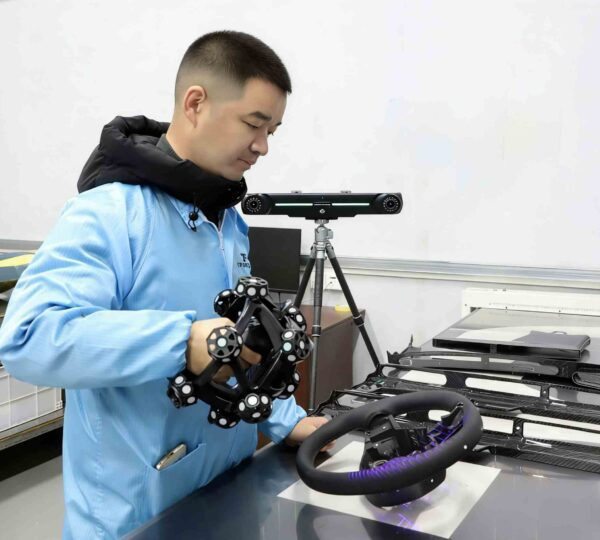
Author: He Dong
He Dong – Automotive & Motorcycle Engineering Specialist, has spent 20+ years doing what he loves most — making cars and bikes faster, sharper, and better looking.