Quick answer: Carbon fiber is naturally black. Not dark grey, not charcoal — black. Every genuine carbon fiber part in the world starts black at the fiber level, whether it’s on a Bugatti or a bicycle.
But if you’ve seen blue carbon fiber trim, gold-flaked forged wheels, or red-accented spoilers, you already know black isn’t the end of the story. This guide explains what color carbon actually is, why it can’t be dyed like fabric, and the five real methods manufacturers use to produce colored carbon fiber — with honest data on what each method costs in strength, durability, and money.

What Color Is Carbon? The Physics of Black
Carbon fiber gets its color from physics, not pigment. During manufacturing, polyacrylonitrile (PAN) precursor fibers are carbonized at temperatures above 1,000°C, stripping away almost everything except carbon atoms arranged in a graphitic crystal structure.
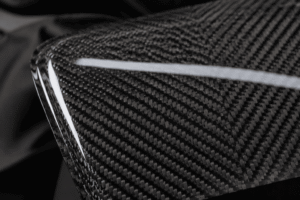
That crystal structure absorbs nearly the entire visible light spectrum — red, green, and blue wavelengths alike — and converts them to heat instead of reflecting them back to your eyes. The result: uniform, deep black, regardless of weave pattern, tow size (1K, 3K, 6K, 12K), or manufacturer.
Key facts worth knowing:
Carbon Fiber Finish Options: Glossy, Matte, Satin
Before any color enters the picture, the first customization decision is surface finish — and it matters more than most buyers realize.
Finish | How It Works | Visual Effect | Watch Out For |
|---|---|---|---|
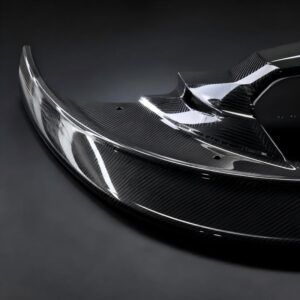
Glossy | High-clarity clear coat reflects light directionally | Maximum depth; weave appears 3D; classic supercar look | Shows fingerprints, swirl marks, micro-scratches |
Matte | Coating formulation scatters light uniformly | Flat, technical, restrained; weave texture becomes the story | Requires a completely different coating chemistry — not “gloss with less shine” |
Satin | Between the two | Subtle sheen, reduced glare | Common for interior trim where reflections distract |
Tinted clear coat | Transparent tint added to top coat | Black weave shows through a colored hue (blue, red, gold…) | Durability depends entirely on coating quality and UV inhibitors |
A practical note: matte and glossy are not the same product with different polish levels. They are different coating systems with different UV and chemical resistance profiles. An exterior part and an interior part may need different coating specifications even if you want them to look identical.
How Is Colored Carbon Fiber Made? The 5 Real Methods
This is the question behind most carbon fiber color searches — and the method matters enormously, because it determines whether the color is permanent, whether it survives sunlight, and whether it compromises strength.
1. Standard Black Weave (The Baseline)
OEM choice for BMW M, Porsche, Ferrari, and Lamborghini. Color comes from the fiber itself. The only variables are weave pattern (2×2 twill, plain weave) and finish. Zero strength penalty, zero UV risk.
2. Forged Carbon Fiber
Chopped carbon strands randomly oriented in a compression mold, creating a flowing marble pattern. Still black, but visually a completely different language from woven carbon — and no two parts are ever identical. Metallic flakes (gold, silver) or pigments can be mixed into the resin before compression for color-infused effects that are permanent, not painted on.
3. Aramid (Kevlar) Hybrid Weaves
Aramid fiber is naturally yellow-gold. Woven together with black carbon tows, it produces genuine two-tone structural color — the classic “carbon-Kevlar” look. Colored aramid fibers (blue, red, orange, silver) extend the palette further. The color is in the fiber itself: structurally permanent and UV-stable by nature, with the bonus of real impact-resistance gains from the aramid content.
4. Tinted Resin
The resin or clear coat itself carries a transparent tint, shifting the overall hue — deep blue, candy red, translucent gold — while the weave texture stays visible underneath. Wide color range and subtle, premium results. The catch: too heavy a tint kills the carbon texture, and long-term durability depends entirely on the resin system’s UV package.
5. Surface Coating / Paint
The widest possible color range — any paint code can be matched. But the durability burden sits entirely on the coating, and a heavy opaque coat hides the weave completely, which defeats the point of carbon fiber for most buyers.
Method | Color Range | Permanence | UV Stability | Strength Impact |
|---|---|---|---|---|
Standard black weave | Black only | Permanent (fiber-level) | Excellent | None |
Forged carbon (± flakes) | Black + metallic/color accents | Permanent (in-resin) | Good with proper clear coat | None when engineered correctly |
Aramid hybrid weave | Yellow-gold, blue, red, silver | Permanent (fiber-level) | Excellent (fiber-level) | Adds impact toughness |
Tinted resin | Wide, translucent hues | Good | Depends on resin UV package | None if fiber volume ratio maintained |
Surface coating/paint | Unlimited | Depends on coating | Depends on coating | None (surface only) |
Does Colored Carbon Fiber Lose Strength?
Direct answer: not when it’s done correctly. Carbon fiber’s tensile strength (3.5–6.0 GPa at the fiber level) is a property of the fiber — not of its surface color.
What can hurt strength is poor execution:
These are engineering failures, not coloring failures. A reputable manufacturer validates the complete material system — for reference, professional-grade validation typically includes thermal cycling to 120°C, pressure testing at 7 bar, and 2,000-hour accelerated UV exposure before a colored carbon part is approved for production.
How to Choose the Right Carbon Color for Your Project
- Define the environment first. Exterior parts in full sun need automotive-grade UV inhibitors in the coating. Interior parts face heat but not UV. Marine parts face salt and humidity. The environment filters your color menu before aesthetics do.
- Pick the implementation method. Want color that can never fade? Choose fiber-level color (aramid hybrid, forged with in-resin flakes). Want a specific brand hue? Tinted resin or coating — but demand the UV test data.
- Match the finish to the use. Glossy for showpieces and exterior aero. Matte for interiors and track-focused builds where glare and fingerprints matter.
- Budget honestly. Hybrid fabrics and forged carbon carry material premiums; custom weaves need dedicated setup. Specify color at the design stage — changing it after tooling is where budgets die.

FAQ
Carbon fiber color — frequently asked questions
Common questions about carbon fiber colors, finishes and customization.
The Bottom Line
What color is carbon? Black — always. But carbon fiber color as a finished product is an engineering decision with real options: fiber-level color that can never fade, resin tints that preserve the weave, and coatings that open the full palette. Choose the method before you choose the shade, demand validation data from your supplier, and black becomes a starting point instead of a limitation.
Looking for carbon fiber parts with a finish that fits your build? At JC AUTOCARBON we manufacture custom interior trim, mirror covers and exterior aero parts in twill, forged, and hybrid weaves — tell us the look you want.
Author: He Dong
He Dong has spent 20+ years doing what he loves most — making cars and bikes faster, sharper, and better looking.
As an Automotive & Motorcycle Engineering Specialist, he’s worked on everything from engine builds and chassis tweaks to track machines and custom aftermarket projects. If it has wheels and an engine, he’s probably taken it apart and made it better.
These days he focuses on the aftermarket world, where good engineering meets real-world budgets — and he’s not shy about calling out parts that look great in photos but don’t perform.
This blog is where he shares what’s worked, what’s failed, and what he’s learned along the way. Honest, hands-on advice, straight from someone who’s done the work himself.