When people search “carbon fiber color”, they usually expect a one-word answer: black.
That answer is true. But it is not the full story.
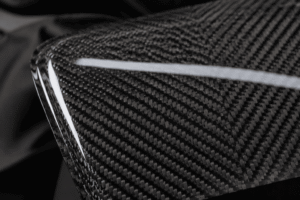
Yes, carbon fiber is black at the material level. Its fiber structure absorbs almost all visible light, so it looks like a deep, dark grey — close to color code #262626. But the part you see on a car is never just raw fiber. It is fiber + weave + resin + clear coat. And every one of those layers can change the final color.
So the better question is: what colors can carbon fiber become, and which one should you choose for your car?
In this guide, we explain every real carbon fiber color option, how each one is made, and give you clear recommendations for each part of your car — all from the view of a manufacturer that builds these parts every day.
Why Is Carbon Fiber Black?
Carbon fiber is made by heating a polymer at over 1,000°C. This process removes almost everything except carbon. The result is a fiber with a graphite-like structure that absorbs light instead of reflecting it. That is why carbon fiber is always black, no matter the brand, the weave, or the price.
The black is not a paint or a dye. It is the fiber itself. This is good news: the base color can never fade, peel, or scratch off.
What changes the look is everything on top of the fiber:
This is where carbon fiber color customization begins.
The Main Carbon Fiber Colors and Finishes
Here is the full carbon fiber color menu we produce at JC AUTOCARBON. Every option below is a real finish from our workshop — not a render.
Classic Black Finishes
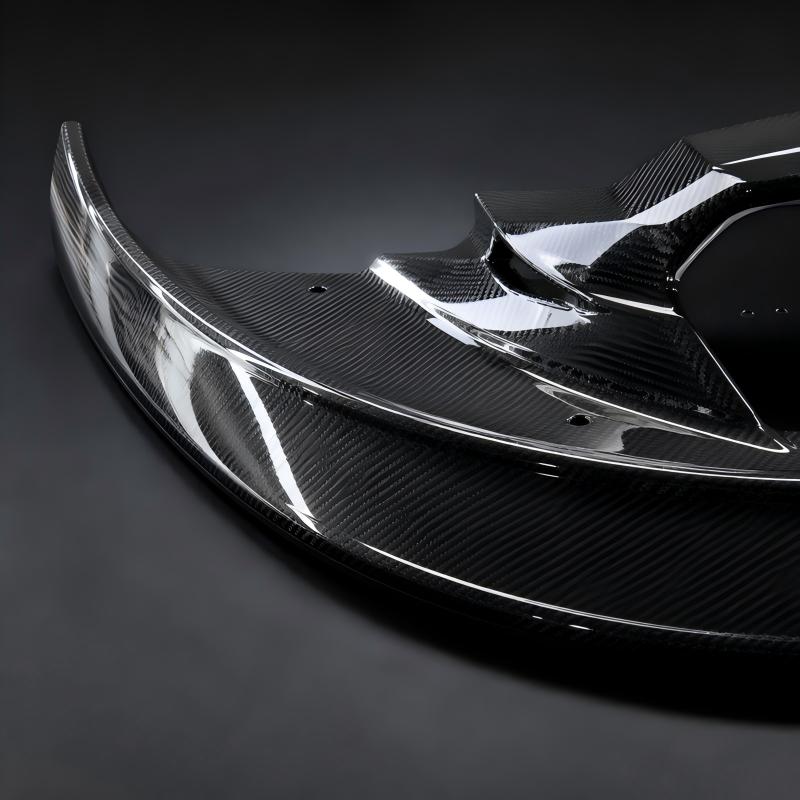
Matte Black
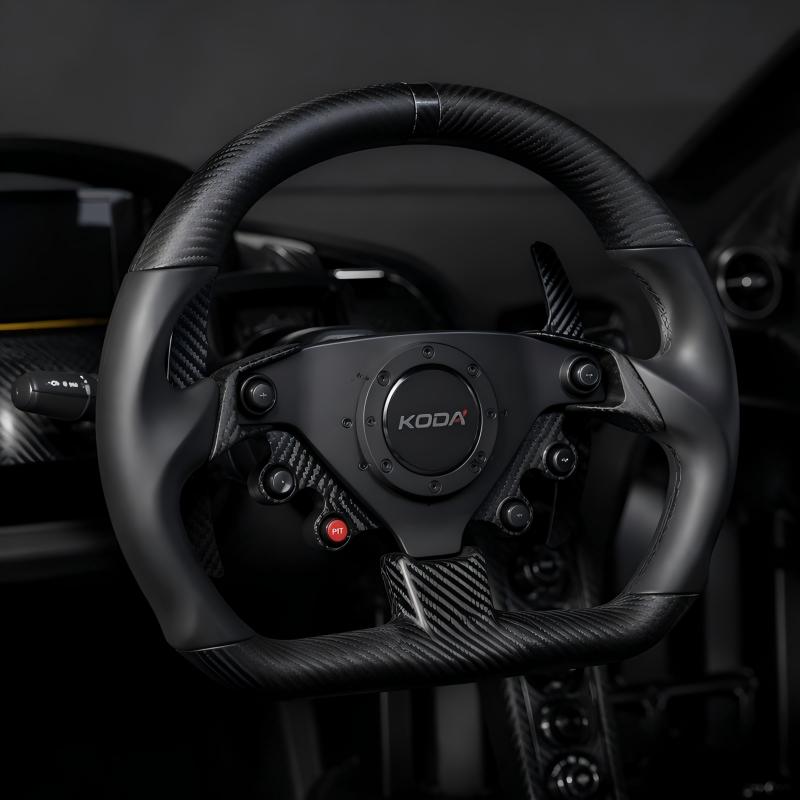
Standard black carbon with a non-reflective matte coat. A stealth, technical look that hides dust and fingerprints. Best for interior trim and low exterior parts.
Smoked Black
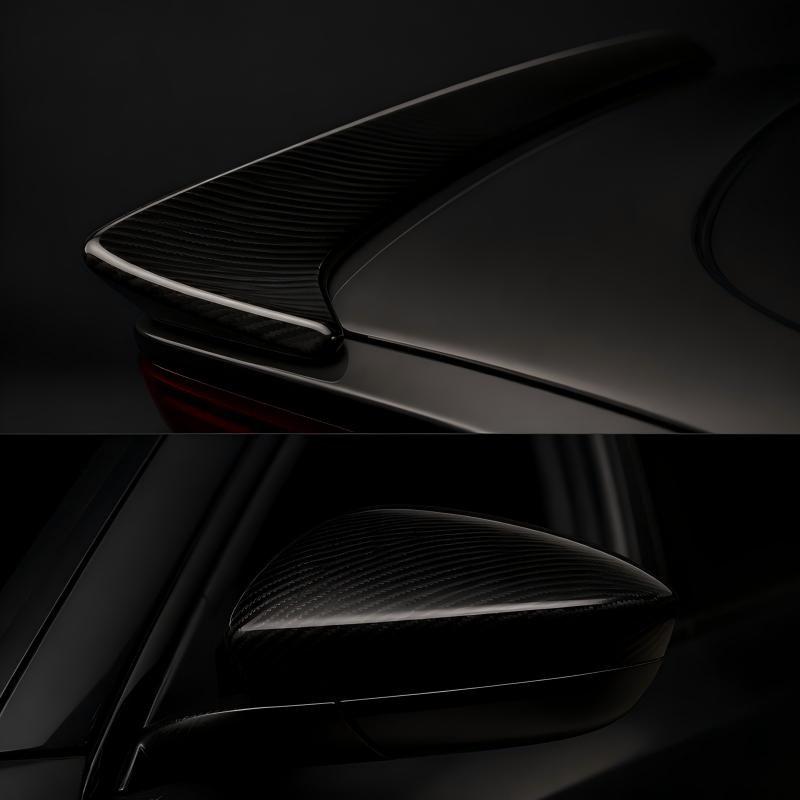
Black carbon under a semi-transparent smoked tint. Still black, but with extra depth — a subtle upgrade over plain gloss.
Kevlar Hybrid Colors (Color Woven into the Fiber)
Red & Black Hybrid
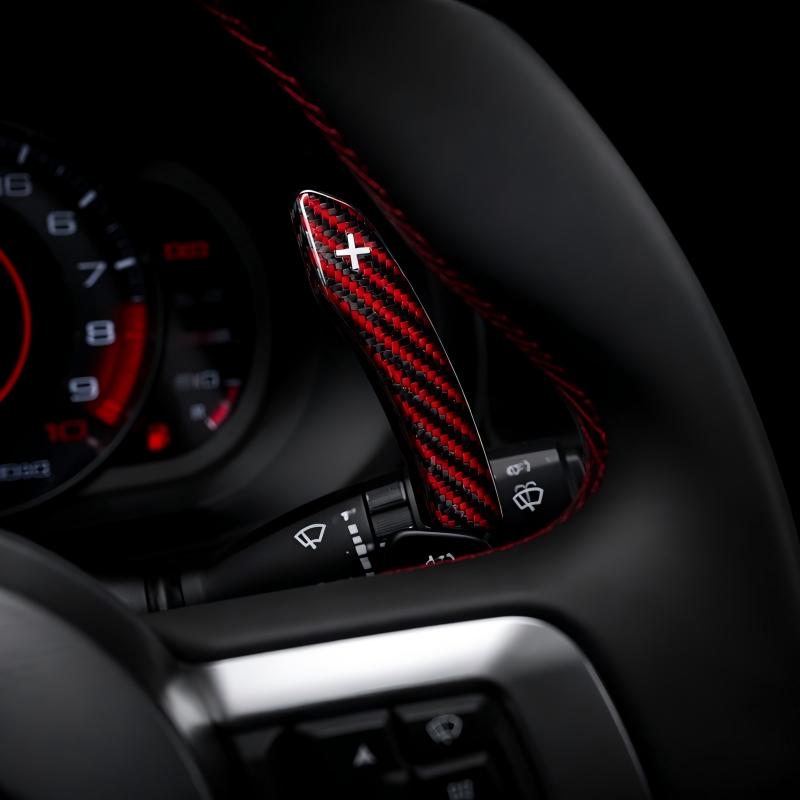
Black carbon woven 1:1 with red Kevlar (aramid) fiber. The color is inside the fabric itself, so it can never peel or fade. Kevlar also adds real impact resistance.
Blue & Black Hybrid
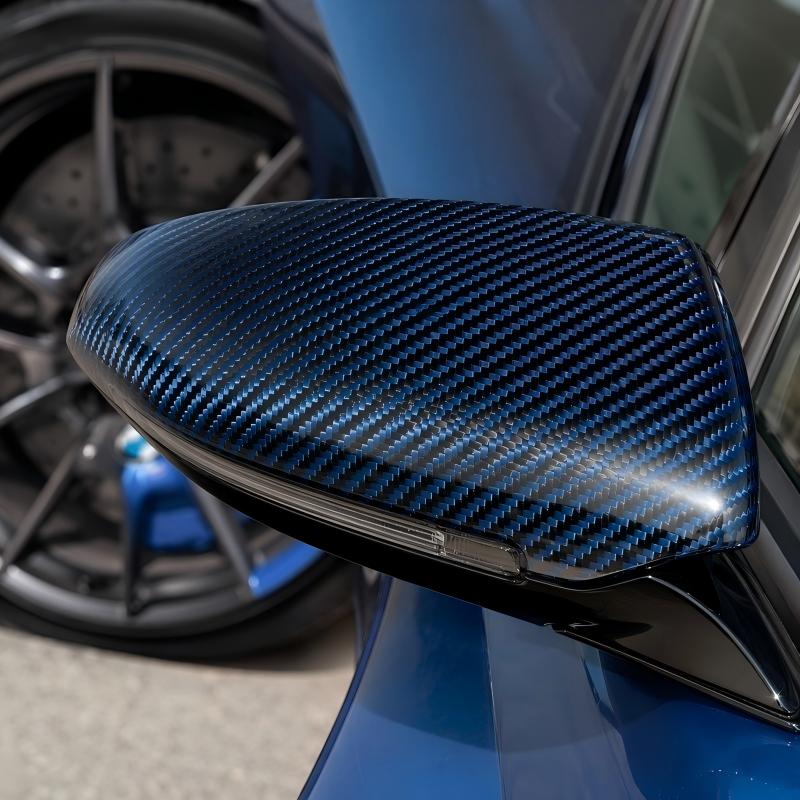
Black carbon woven with blue aramid fiber. A favorite for matching blue brake calipers, blue stitching, or M-style color themes.
Yellow & Black Hybrid
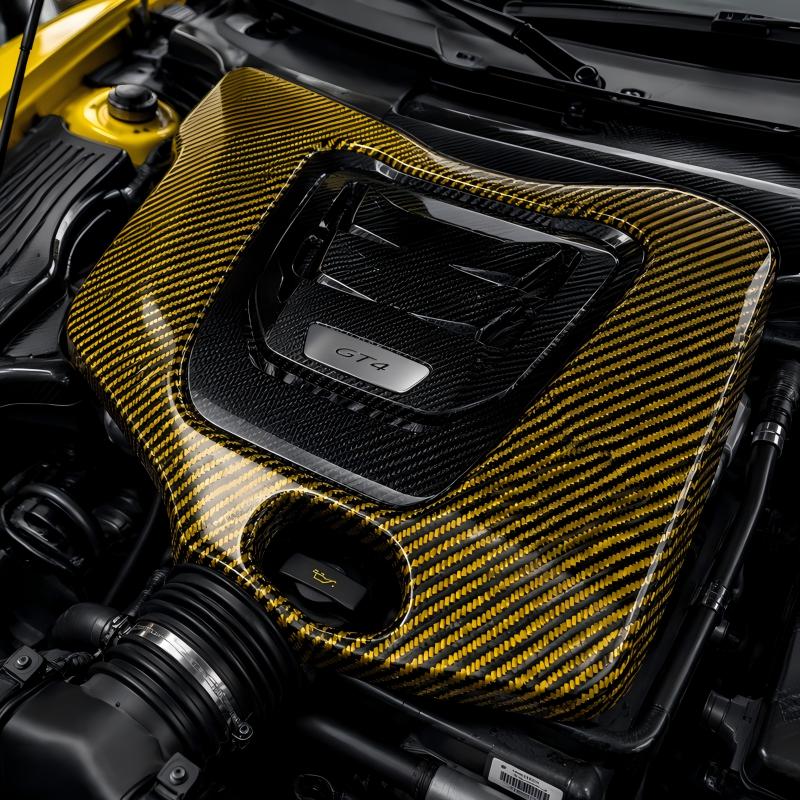
Black carbon woven with yellow aramid fiber. Bold, racing-style look — popular for track cars and yellow-accent builds.
Metallic Silver
Texalium Silver
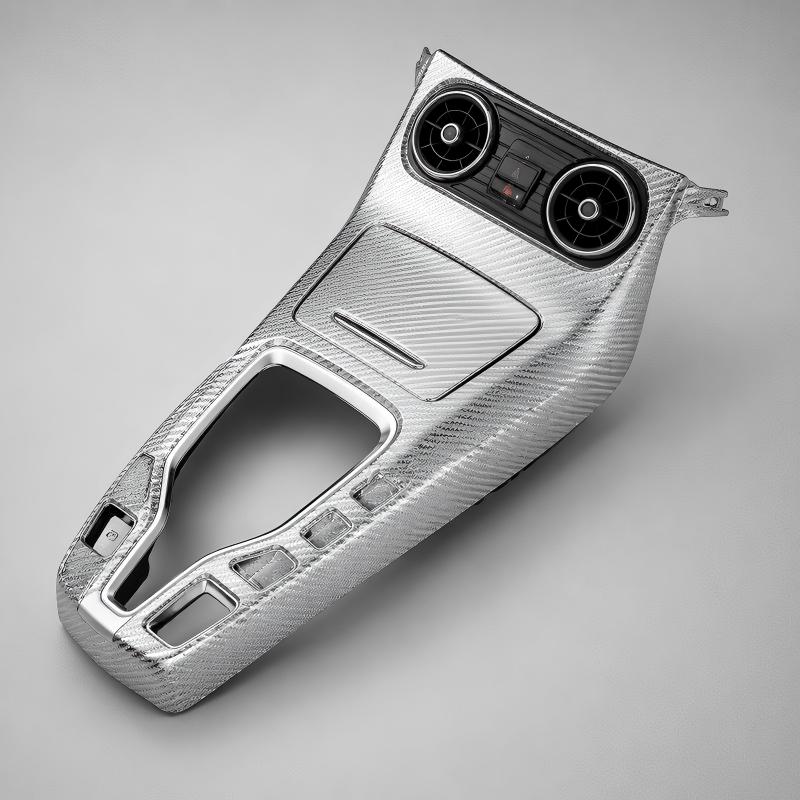
Glass fiber weave with a fine aluminum coating. A bright metallic silver that looks like silver carbon. Great for decorative interior trim on white or silver cars.
Candy Tinted Finishes
Candy Green
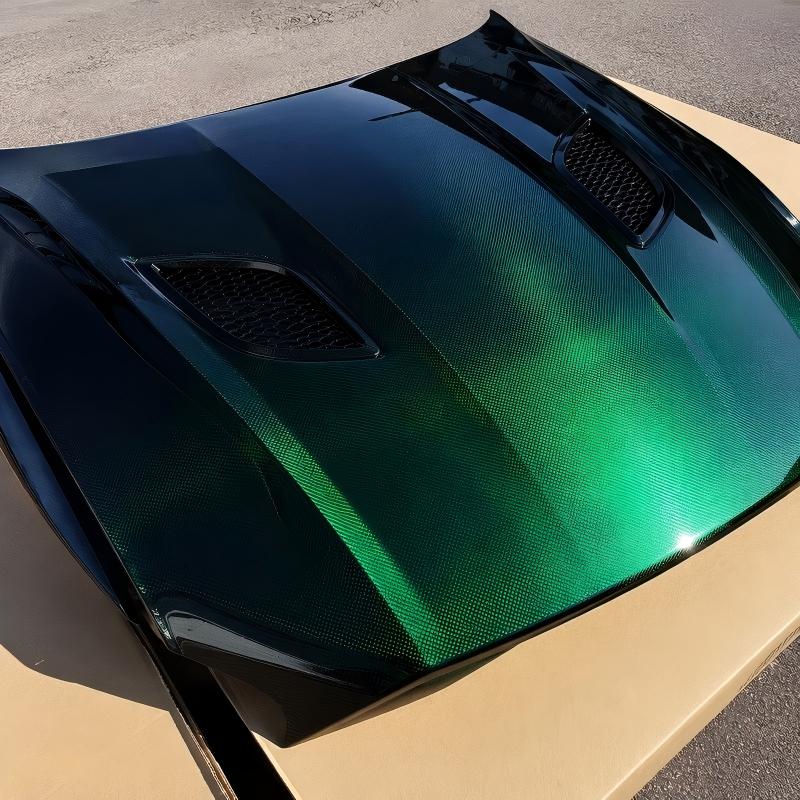
Black carbon under a transparent emerald green clear coat. The weave stays visible, glowing green in the light.
Candy Red
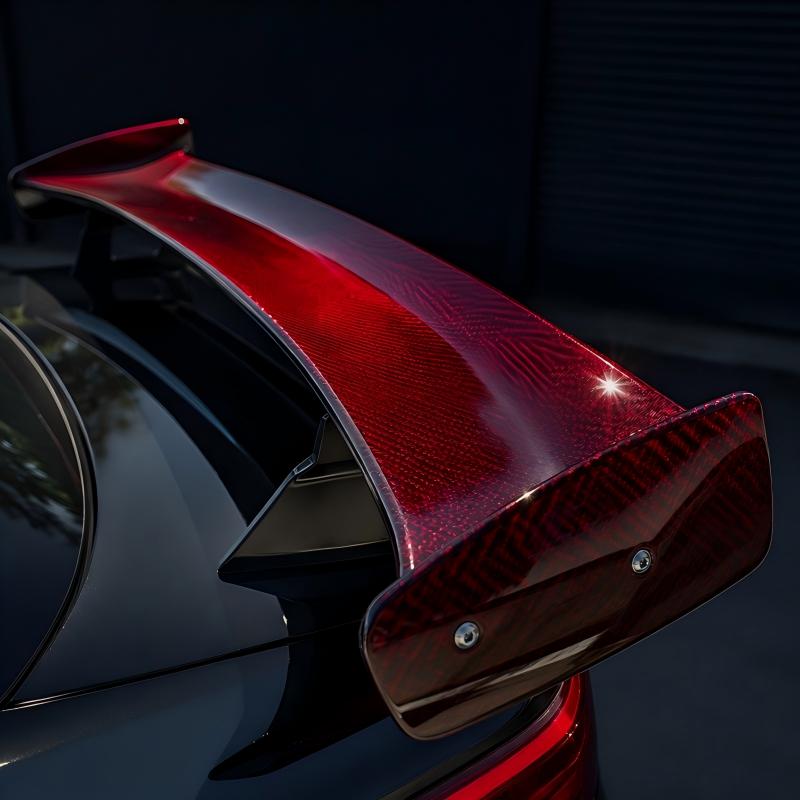
Black carbon under a transparent apple red clear coat. A deep red glow over a black weave — pairs well with red cars.
Candy Blue
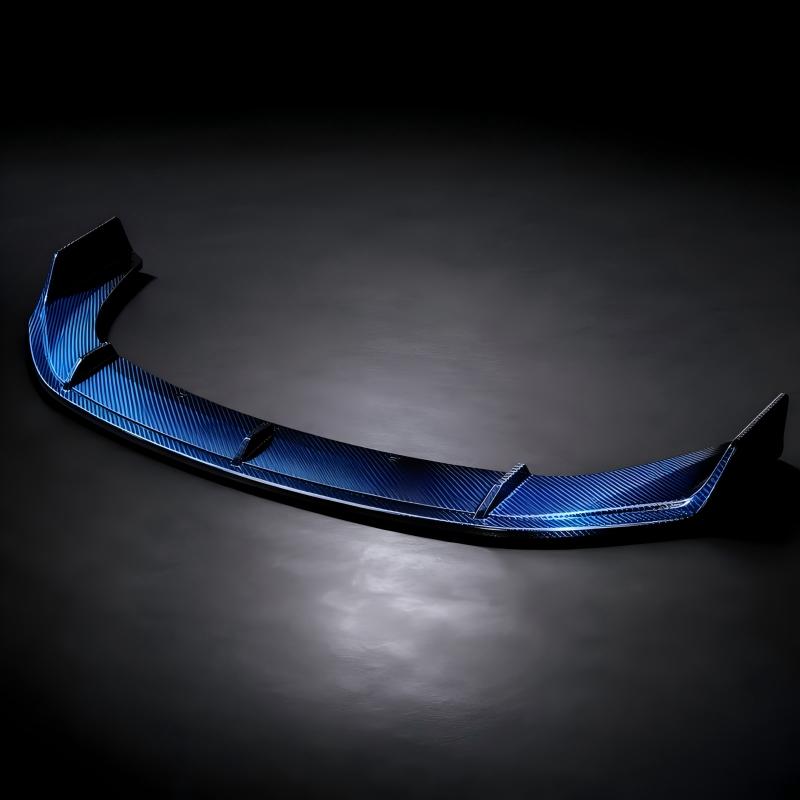
Black carbon under a transparent aurora blue clear coat. Cool, modern, and eye-catching without hiding the carbon pattern.
Forged Carbon (Marble Look)
Standard Forged Carbon
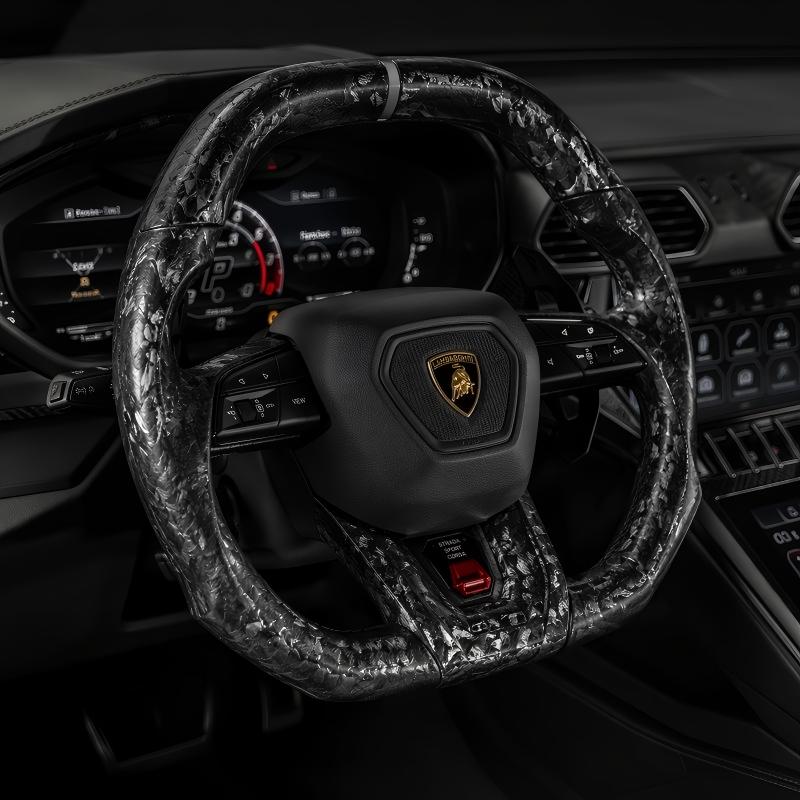
Chopped carbon strands pressed under high pressure. A marble-like pattern where every single piece is unique. The modern supercar look.
Gold Flake Forged
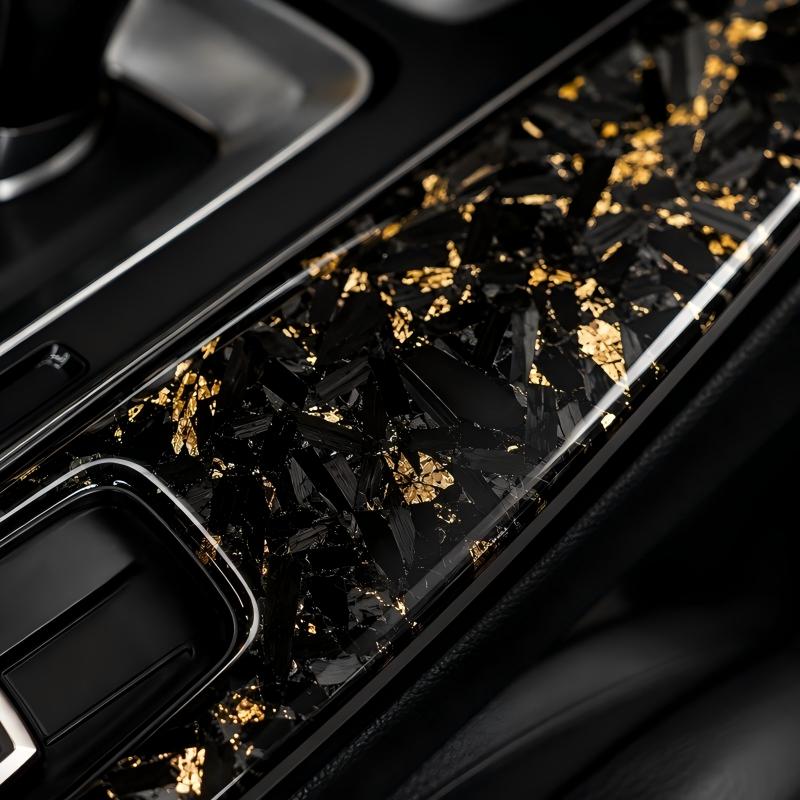
Forged carbon mixed with gold leaf flakes. A luxury finish for show cars and high-end interior trim.
Silver Flake Forged
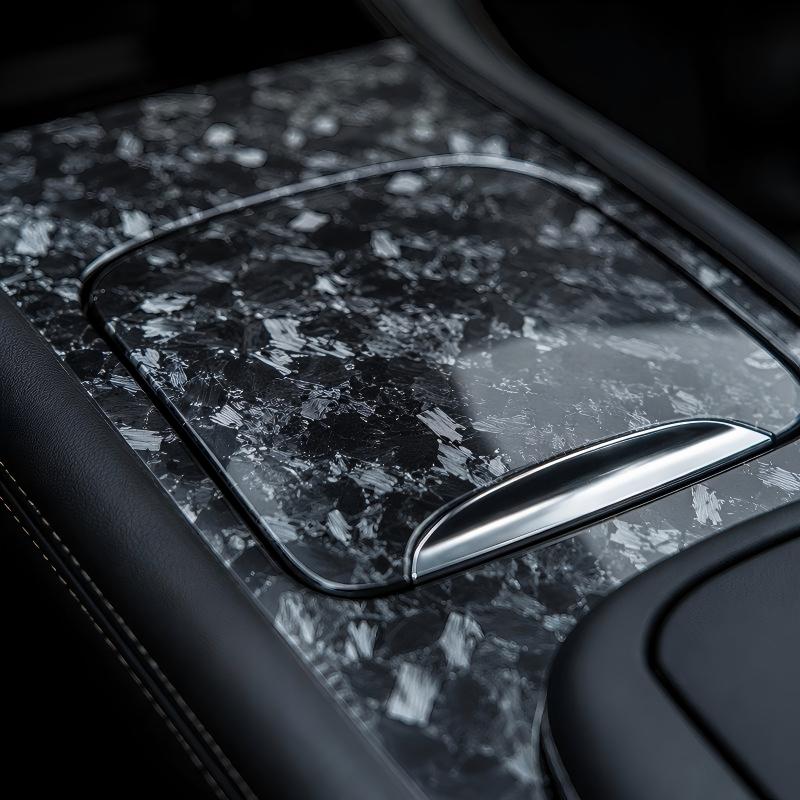
Forged carbon mixed with silver aluminum flakes. Brighter and more technical than standard forged.
Metallic Flake Forged
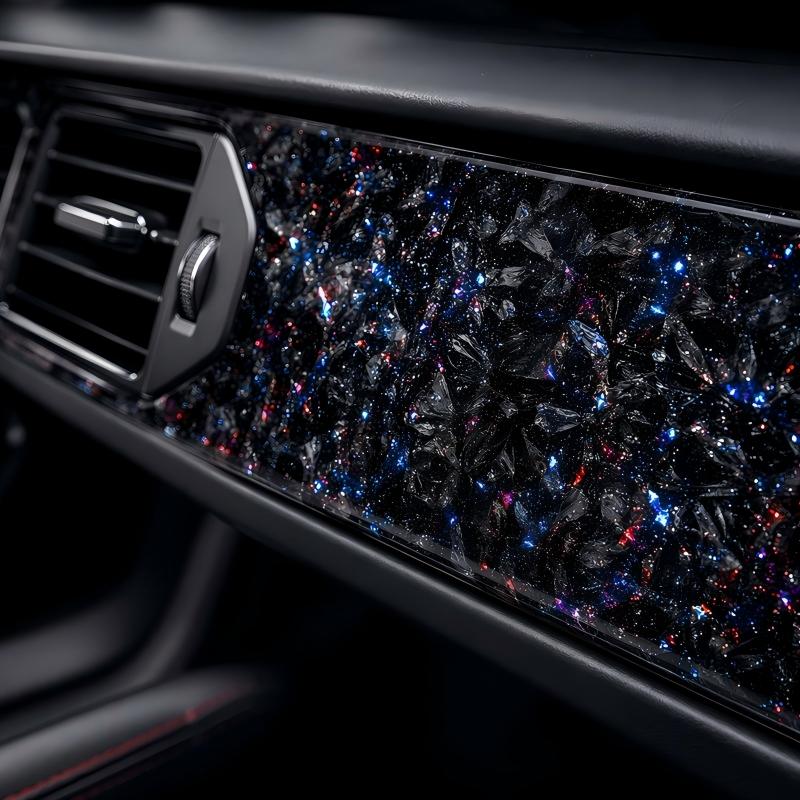
Forged carbon mixed with colored metallic flakes. Custom color sparkle on the marble base — made to order.
The key thing to understand: there are two ways to get color, and they age differently.
Which Carbon Fiber Color for Which Car Part?
This is the advice we give our customers most often. Part location decides what the color has to survive — sun, heat, stone chips, or just eyes and hands.
Hood, Roof, and Large Body Panels
Recommended: Gloss black 2×2 twill, or forged carbon.
These are the biggest, most visible panels on the car. A deep gloss finish shows the weave best in sunlight. Forged carbon is the modern supercar look and hides small dust and water marks better than gloss twill. If you want the OEM-style look (BMW M, Porsche, Ferrari style), choose gloss twill. If you want the car to stand out, choose forged.
Always add a UV-protection clear coat — these panels face the sun all day.
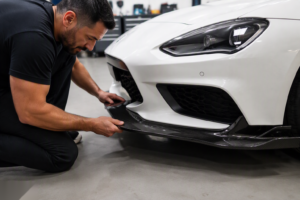
Front Lip, Side Skirts, Rear Diffuser, Canards
Recommended: Gloss black or matte black. For impact areas, red or yellow Kevlar hybrid.
These low parts — front lips, side skirts, rear diffusers and canards — take stone chips and scratches. Matte black hides damage better than gloss. If the part sits close to the road (front splitter, under-tray), a Kevlar hybrid weave is a smart upgrade — Kevlar adds real impact resistance, and the red or yellow thread in the weave is a bonus style detail.
Rear Spoiler and Rear Wing
Recommended: Gloss black twill or dry carbon with gloss finish.
Rear spoilers and wings are seen from behind and above, usually at distance. Gloss black keeps the car’s lines clean and matches almost any paint color. On track cars, the wing is about function first — keep it simple and strong.
Mirror Covers and Small Exterior Trim
Recommended: Matte black or 1×1 plain weave.
Small parts like mirror covers with gloss finish can look “sticker-like” on some cars. Matte finish or a tight plain weave looks more like factory equipment. This is the easiest, safest color choice if you are not sure.
Interior Trim, Dashboard, Steering Wheel
Recommended: Matte black, plain weave, or forged carbon.
Inside the car, gloss surfaces create glare on the windshield — a real safety issue. Matte or satin finishes are the right choice. Forged carbon works very well on interior trim because you see it up close, where the marble pattern looks its best. Red or blue Kevlar hybrid is a popular way to match interior stitching.
Engine Bay Covers and Intake Parts
Recommended: Matte black or forged carbon.
Engine bay covers live in a hot, oily environment. Matte finish hides dust and fingerprints from maintenance work. Avoid light candy tints here — heat and oil vapor age tinted coatings faster.
Want a Unified Look? How to Choose One Color Theme
I want a full carbon package — how do I keep it looking like one design, not a mix of parts?
Here is our simple rule: one base color + one accent color maximum.
Which Color Works with Which Material and Process?
Color choice is not only about looks. The material and the process decide what colors are possible and how long they last.
Wet carbon fiber (vacuum infusion / hand layup + clear coat)
Best value for exterior styling parts. Works with all finish options: gloss, matte, smoked, and candy tints. This is the right process for candy colors, because the color lives in the clear coat. Choose wet carbon for front lips, side skirts, and diffusers when budget matters.
Dry carbon fiber (prepreg, cured under controlled heat and pressure)
Lighter and stronger, with a very clean weave. Best shown in gloss black or matte black — the quality of the fiber is the point. Adding heavy tints on premium dry carbon hides what you paid for. Choose dry carbon for hoods, wings, and track parts.
Kevlar hybrid weave (carbon + colored aramid)
The color is woven in at the fabric stage, so red, blue, or yellow options must be decided before production — you cannot add them later. Best for impact areas and accent parts. This is the most durable way to get a colored carbon fiber part.
Forged carbon (chopped fiber + compression molding)
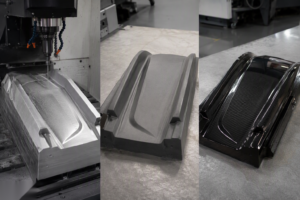
Made in a mold, so it suits smaller, shaped parts: mirror covers, interior trim, engine covers, wheel center caps. Gold, silver, or metallic flakes must be mixed in during molding. Standard forged (no flakes) is the most popular and the most timeless.
Texalium (aluminum-coated glass fiber)
A different material, not true carbon, but it looks like silver carbon weave. Good for decorative trim where weight is not critical. Not recommended for structural or high-heat parts.
Does Color Affect Carbon Fiber Strength?
Short answer: no — if it is done right.
Carbon fiber’s strength comes from the fiber itself, not from its color. A red Kevlar hybrid is not weaker than black carbon — in fact, Kevlar adds impact resistance. A candy-tinted part is as strong as the carbon underneath it.
Problems only appear when color is added the wrong way: too much resin, cheap coatings that crack in heat, or no UV protection on an exterior part. These are engineering mistakes, not color mistakes.
That is why every JC AUTOCARBON color option is tested as a complete system — fiber, resin, and coating together — with UV-aging and heat tests before we offer it to customers.
How to Order Your Custom Carbon Fiber Color
At JC AUTOCARBON, color customization is part of our standard carbon fiber parts customized development service. The process is simple:
Most projects deliver first samples in 45–58 days after design confirmation.
FAQs
JC AUTOCARBON is JCSPORTLINE’s automotive carbon fiber platform. We design, prototype, and manufacture custom carbon fiber parts for automotive brands and professionals worldwide — from a single mirror cover to a full body kit. Tell us your color idea, and we will make it real.
Author: He Dong
He Dong has spent 20+ years doing what he loves most — making cars and bikes faster, sharper, and better looking.
As an Automotive & Motorcycle Engineering Specialist, he’s worked on everything from engine builds and chassis tweaks to track machines and custom aftermarket projects. If it has wheels and an engine, he’s probably taken it apart and made it better.
These days he focuses on the aftermarket world, where good engineering meets real-world budgets — and he’s not shy about calling out parts that look great in photos but don’t perform.
This blog is where he shares what’s worked, what’s failed, and what he’s learned along the way. Honest, hands-on advice, straight from someone who’s done the work himself.