
Mirror covers are the smallest carbon fiber parts we make — and the quickest win. Fifteen minutes per side, no jacking, no wiring. But they have a reputation for one thing: broken mirror clips. Almost every broken clip comes from the same move — prying in the wrong direction. This guide shows you the right one.
As the manufacturer, we produce two designs: full replacement caps that unclip and replace the OEM mirror cap, and stick-on covers that bond over it with 3M tape. Here is how both install, the same way our engineers do it.
View all carbon fiber mirror cover parts >>

Step 0: Know Which Design You Have
Replacement Cap (Clip-On) | Stick-On Cover | |
|---|---|---|
What it is | Replaces the OEM mirror cap | Overlays the OEM cap |
OEM cap removal | Yes | No |
Mounting | Factory clip points | 3M VHB tape |
Time | 10–15 min per side | 10 min per side |
DIY? | Yes | Yes |
Hold the part up to your mirror: if it is a full shell with clip rails inside, it is a replacement cap. If it is a thin skin that matches the cap’s outer surface only, it is a stick-on cover.
Tools & Prep (Both Designs)
Full prep rules — cleaning, test fitting, temperature — are in our general installation guide.
Method A: Replacement Caps (Clip-On)

Method B: Stick-On Covers (3M Tape)

Time & Difficulty
Design | Time per side | Risk point |
|---|---|---|
Replacement cap | 10–15 min | Breaking OEM clips on removal |
Stick-on cover | 10 min | Misalignment — tape bonds fast |
Either way, both mirrors done inside half an hour, including cleaning.
The 5 Mistakes That Ruin Mirror Cover Installs
After Installation
FAQs
Shopping for mirror covers? Browse all carbon fiber mirror covers — applications including BMW F80 M3 / F82 M4, BMW M3 and BMW M4. Replacement caps and stick-on covers both ship with everything needed for the install.
More Carbon Fiber Installation Guides
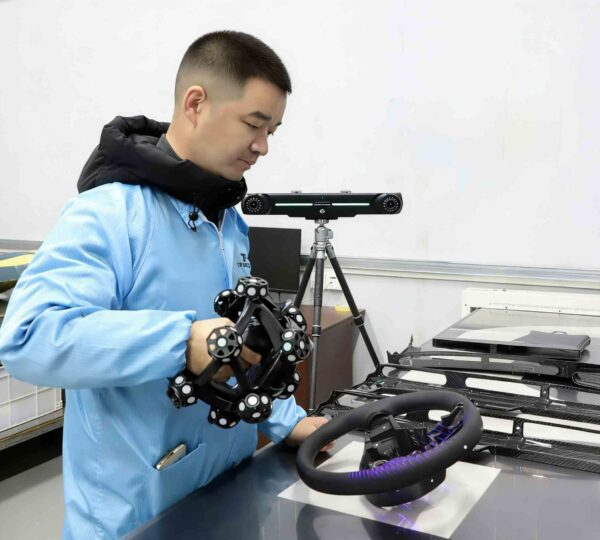
Author: He Dong
He Dong has spent 20+ years doing what he loves most — making cars and bikes faster, sharper, and better looking.
As an Automotive & Motorcycle Engineering Specialist, he’s worked on everything from engine builds and chassis tweaks to track machines and custom aftermarket projects. If it has wheels and an engine, he’s probably taken it apart and made it better.
These days he focuses on the aftermarket world, where good engineering meets real-world budgets — and he’s not shy about calling out parts that look great in photos but don’t perform.
This blog is where he shares what’s worked, what’s failed, and what he’s learned along the way. Honest, hands-on advice, straight from someone who’s done the work himself.


